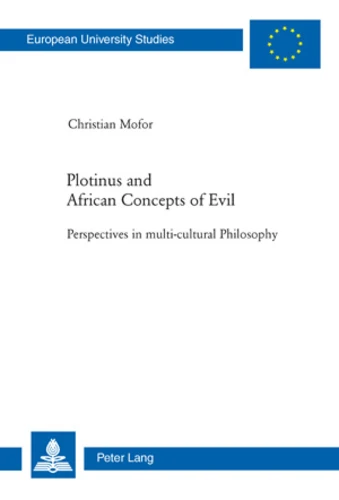
Plotinus and African Concepts of Evil. Perspectives in multi-cultural Philosophy
Par :Formats :
- Paiement en ligne :
- Livraison à domicile ou en point Mondial Relay estimée à partir du 2 décembreCet article sera commandé chez un fournisseur et vous sera envoyé 127 jours après la date de votre commande.
- Retrait Click and Collect en magasin gratuit
- Livraison à domicile ou en point Mondial Relay estimée à partir du 2 décembre
- Réservation en ligne avec paiement en magasin :
- Indisponible pour réserver et payer en magasin
- Nombre de pages333
- ISBN978-3-03911-253-1
- EAN9783039112531
- Date de parution01/07/2008
- CollectionEuropäische Hochschulschriften
- ÉditeurPeter Lang
Résumé
This book explores the concepts of evil in the world-views of Plotinus and the Nso' people of Cameroon. The author analyzes the theories of the natural structure and social organization of these views of the world. He stresses the importance of comparing Plotinus and African philosophy. The book offers a proper appreciation of fundamental differences, parallels and similarities and seeks to build on shared values and common existential concerns in the world-views of Plotinus and the Nso'.
This book highlights the assumption that the world understood in terms of its wider dimensions is not a purposeless conglomerate of phenomena and events that bear no relation to each other, but is rather a structured whole, defined by hierarchy and order.
This book highlights the assumption that the world understood in terms of its wider dimensions is not a purposeless conglomerate of phenomena and events that bear no relation to each other, but is rather a structured whole, defined by hierarchy and order.