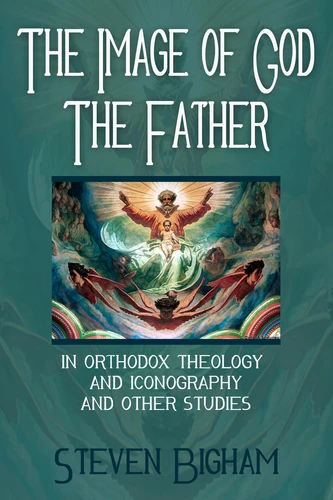
This book presents a series of essays for edification, discussion, comment and even disagreement. The exposition on the theme of God the Father in iconography returns to the roots of Orthodox iconography from which practitioners have strayed so completely, especially in recent centuries. Today, there is a tremendous interest in authentic iconography engendered, among other things, by greater freedom to travel in such countries as Russia where 18th and 19th century icons of God the Father abound.
Travelers see these images and come back with many questions which the chapter on such images attempts to answer. More important, the broad interest in traditional Christianity throughout the English-speaking world has generated a need to present authentic expressions of the faith. The chapter on canons dealing with iconography brings together documents issued by Church councils and other sources having to do with images.
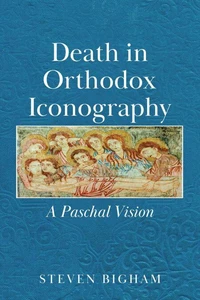
Being able to study these documents in one book should help students and readers to consult the original texts which ground the iconographic tradition. Chapter III draws attention to the role that eyes play in an icon. Since "eyes are the door to the soul, " they should also be the locus of communion established by an icon with the person represented. This is unfortunately not always the case. How is death represented in icons? The next chapter shows the difference between Western and Eastern representations of death.
Is being an iconographer a ministry in the Church or just another way to make paintings of a religious nature? The following study takes up this subject. Then the final chapter analyzes the theology of St. Gregory Palamas to see what impact it has on icons. The author says that, even though St. Gregory never spoke about icons, his theology is very relevant to understanding them. Where appropriate, images accompany the texts to provide examples or to illustrate a point.
This book presents a series of essays for edification, discussion, comment and even disagreement. The exposition on the theme of God the Father in iconography returns to the roots of Orthodox iconography from which practitioners have strayed so completely, especially in recent centuries. Today, there is a tremendous interest in authentic iconography engendered, among other things, by greater freedom to travel in such countries as Russia where 18th and 19th century icons of God the Father abound.
Travelers see these images and come back with many questions which the chapter on such images attempts to answer. More important, the broad interest in traditional Christianity throughout the English-speaking world has generated a need to present authentic expressions of the faith. The chapter on canons dealing with iconography brings together documents issued by Church councils and other sources having to do with images.
Being able to study these documents in one book should help students and readers to consult the original texts which ground the iconographic tradition. Chapter III draws attention to the role that eyes play in an icon. Since "eyes are the door to the soul, " they should also be the locus of communion established by an icon with the person represented. This is unfortunately not always the case. How is death represented in icons? The next chapter shows the difference between Western and Eastern representations of death.
Is being an iconographer a ministry in the Church or just another way to make paintings of a religious nature? The following study takes up this subject. Then the final chapter analyzes the theology of St. Gregory Palamas to see what impact it has on icons. The author says that, even though St. Gregory never spoke about icons, his theology is very relevant to understanding them. Where appropriate, images accompany the texts to provide examples or to illustrate a point.

 , qui est-ce ?