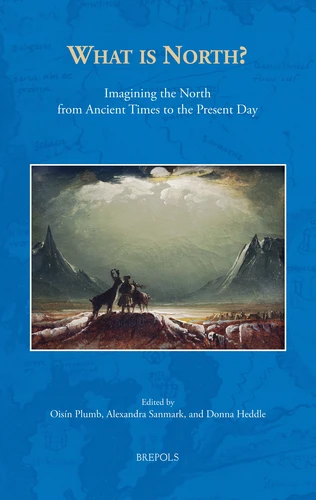
What is North?. Imagining the North from Ancient Times to the Present Day
Par : , ,Formats :
- Paiement en ligne :
- Livraison à domicile ou en point Mondial Relay estimée à partir du 16 septembreCet article sera commandé chez un fournisseur et vous sera envoyé 25 jours après la date de votre commande.
- Retrait Click and Collect en magasin gratuit
- Réservation en ligne avec paiement en magasin :
- Indisponible pour réserver et payer en magasin
- Nombre de pages408
- PrésentationRelié
- Poids0.82 kg
- Dimensions15,6 cm × 23,4 cm × 0,0 cm
- ISBN978-2-503-58502-4
- EAN9782503585024
- Date de parution15/06/2020
- CollectionThe North Atlantic World
- ÉditeurBrepols
Résumé
The British Isles, Scandinavia, Iceland, Greenland, and Eastern Canada, alongside many small islands, form a broken bridge across the northern extremities of the Atlantic Ocean. This ‘North Atlantic World' is a heterogeneous but culturally intertwined area, ideally suited to the fostering of an interest in all things northern by its people. For the storytellers and writers of the past, each more northerly land was far enough away that it could seem fabulous and even otherworldly, while still being just close enough for myths and travellers' tales to accrue.
This book charts attitudes to the North in the North Atlantic World from the time of the earliest extant sources until the present day. The varied papers within consider a number of key questions which have arisen repeatedly over the centuries : ‘where is the North located ? ', ‘what are its characteristics ? ', and ‘who, or what lives there ? '. They do so from many angles, considering numerous locations and an immense span of time.
All are united by their engagement with the North Atlantic World's relationship with the North.
This book charts attitudes to the North in the North Atlantic World from the time of the earliest extant sources until the present day. The varied papers within consider a number of key questions which have arisen repeatedly over the centuries : ‘where is the North located ? ', ‘what are its characteristics ? ', and ‘who, or what lives there ? '. They do so from many angles, considering numerous locations and an immense span of time.
All are united by their engagement with the North Atlantic World's relationship with the North.