SOLDES
Jusqu'à -70% sur une sélection d'articles*

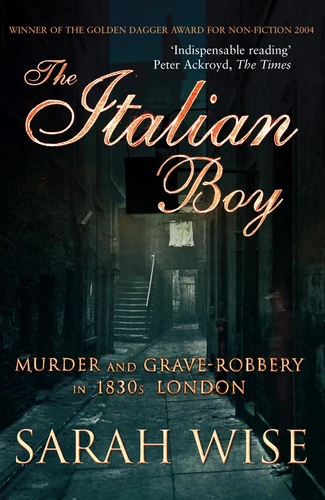
The Italian Boy. Murder and Grave-Robbery in 1830s London
Par :Formats :
Disponible dans votre compte client Decitre ou Furet du Nord dès validation de votre commande. Le format ePub protégé est :
- Compatible avec une lecture sur My Vivlio (smartphone, tablette, ordinateur)
- Compatible avec une lecture sur liseuses Vivlio
- Pour les liseuses autres que Vivlio, vous devez utiliser le logiciel Adobe Digital Edition. Non compatible avec la lecture sur les liseuses Kindle, Remarkable et Sony
- Non compatible avec un achat hors France métropolitaine
 , qui est-ce ?
Notre partenaire de plateforme de lecture numérique où vous retrouverez l'ensemble de vos ebooks gratuitement
Pour en savoir plus sur nos ebooks, consultez notre aide en ligne ici
C'est si simple ! Lisez votre ebook avec l'app Vivlio sur votre tablette, mobile ou ordinateur :

- Nombre de pages368
- FormatePub
- ISBN978-1-4481-6224-6
- EAN9781448162246
- Date de parution31/12/2012
- Protection num.Adobe DRM
- Infos supplémentairesepub
- ÉditeurVintage Digital
Résumé
Towards the end of 1831, the authorities unearthed a series of crimes at Number 3, Nova Scotia Gardens in East London that appeared to echo the notorious Burke and Hare killings in Edinburgh three years earlier. After a long investigation, three bodysnatchers were put on trial for supplying the anatomy schools of London with suspiciously fresh bodies for dissection. They later became known as The London Burkers, and their story was dubbed 'The Italian Boy' case.
The furore which led directly to the passing of controversial legislation which marked the beginning of the end of body snatching in Britain. In The Italian Boy, Sarah Wise not only investigates the case of the London Burkers but also, by making use of an incredibly rich archival store, the lives of ordinary lower-class Londoners. Here is a window on the lives of the poor - a window that is opaque in places, shattered in others but which provides an unprecedented view of low-life London in the 1830s.
The furore which led directly to the passing of controversial legislation which marked the beginning of the end of body snatching in Britain. In The Italian Boy, Sarah Wise not only investigates the case of the London Burkers but also, by making use of an incredibly rich archival store, the lives of ordinary lower-class Londoners. Here is a window on the lives of the poor - a window that is opaque in places, shattered in others but which provides an unprecedented view of low-life London in the 1830s.