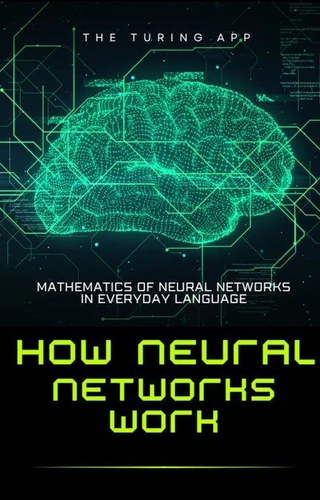
This book is an essential guide to how artificial intelligence learns to see. Written in everyday language, we explore how a machine can take something as familiar as a photo of a dog and transform it into numbers, patterns, probabilities, and finally, recognition. At its heart, we answer the question: how does a neural network turn raw data into understanding? A computer does not see fur, eyes, paws, or movement.
It sees pixels, and each pixel is only a set of numbers. From there, it follows those numbers into the artificial brain, where layers of connected nodes, weights, and biases gradually turn a grid of colored dots into meaningful features. The book explains how convolutional neural networks learn to recognize images step by step. We move from early layers that detect edges and colors, to deeper layers that combine those signals into shapes, textures, ears, snouts, and eventually the larger idea of "dog." Along the way, we show how pooling helps the network generalize and how final decision layers weigh the evidence before producing an answer.
We then discuss how a neural network learns from its mistakes. The book walks through training as a cycle of guessing, measuring error, assigning blame, and slowly adjusting millions of internal dials through backpropagation and gradient descent. It also explains why memorization is not enough, and how techniques like data augmentation and dropout help models learn patterns that hold up in the real world.
Finally, the book moves from the basic neural network to the frontier of machine perception. It explores deeper architectures, residual connections, attention, Vision Transformers, saliency maps, world models, bias, fairness, and the responsibility that comes with building systems that increasingly shape how we classify, search, diagnose, create, and understand the world.
This book is an essential guide to how artificial intelligence learns to see. Written in everyday language, we explore how a machine can take something as familiar as a photo of a dog and transform it into numbers, patterns, probabilities, and finally, recognition. At its heart, we answer the question: how does a neural network turn raw data into understanding? A computer does not see fur, eyes, paws, or movement.
It sees pixels, and each pixel is only a set of numbers. From there, it follows those numbers into the artificial brain, where layers of connected nodes, weights, and biases gradually turn a grid of colored dots into meaningful features. The book explains how convolutional neural networks learn to recognize images step by step. We move from early layers that detect edges and colors, to deeper layers that combine those signals into shapes, textures, ears, snouts, and eventually the larger idea of "dog." Along the way, we show how pooling helps the network generalize and how final decision layers weigh the evidence before producing an answer.
We then discuss how a neural network learns from its mistakes. The book walks through training as a cycle of guessing, measuring error, assigning blame, and slowly adjusting millions of internal dials through backpropagation and gradient descent. It also explains why memorization is not enough, and how techniques like data augmentation and dropout help models learn patterns that hold up in the real world.
Finally, the book moves from the basic neural network to the frontier of machine perception. It explores deeper architectures, residual connections, attention, Vision Transformers, saliency maps, world models, bias, fairness, and the responsibility that comes with building systems that increasingly shape how we classify, search, diagnose, create, and understand the world.


 , qui est-ce ?