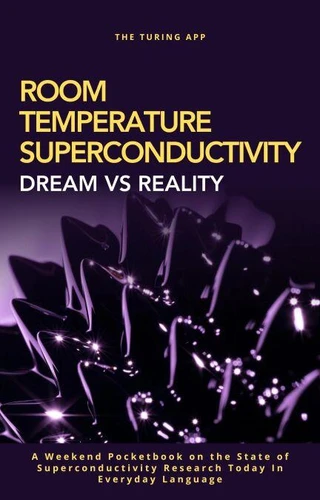
This book is a Weekend Pocketbook on Everything You Should Know About Superconductivity, the century-long quest to build a material where electricity flows with zero resistance. What would change if wires stopped wasting energy as heat?Superconductivity sounds almost magical: current that never fades, magnets strong enough to levitate trains, machines that could reshape medicine, fusion, transport, and power grids.
But there is a catch. For most of its history, the effect has needed extreme cold, extreme pressure, or both. This book follows the high-stakes race to make superconductivity work in normal life. Why did mercury suddenly lose all resistance when cooled near absolute zero? And why did the dream seem so close, then stall for decades?Some materials work at surprisingly high temperatures, but only while crushed under brutal pressure.
Others, such as nickel-based superconductors, suggest that nature may have more than one route to zero resistance. Artificial intelligence is now joining the hunt, searching through possible materials faster than humans ever could. Are we one clever material away from a new electrical age, or is room-temperature superconductivity still hiding behind physics we do not yet understand?
This book is a Weekend Pocketbook on Everything You Should Know About Superconductivity, the century-long quest to build a material where electricity flows with zero resistance. What would change if wires stopped wasting energy as heat?Superconductivity sounds almost magical: current that never fades, magnets strong enough to levitate trains, machines that could reshape medicine, fusion, transport, and power grids.
But there is a catch. For most of its history, the effect has needed extreme cold, extreme pressure, or both. This book follows the high-stakes race to make superconductivity work in normal life. Why did mercury suddenly lose all resistance when cooled near absolute zero? And why did the dream seem so close, then stall for decades?Some materials work at surprisingly high temperatures, but only while crushed under brutal pressure.
Others, such as nickel-based superconductors, suggest that nature may have more than one route to zero resistance. Artificial intelligence is now joining the hunt, searching through possible materials faster than humans ever could. Are we one clever material away from a new electrical age, or is room-temperature superconductivity still hiding behind physics we do not yet understand?

 , qui est-ce ?