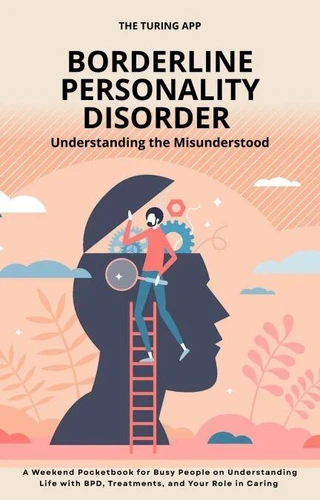
This book is a Weekend Pocketbook on Everything You Should Know About Borderline Personality Disorder and Trauma, the story of how science is rethinking one of psychiatry's most misunderstood diagnoses. Written in everyday language, we explore whether emotional volatility, unstable identity, impulsivity, and fear of abandonment may be better understood as signs of a nervous system shaped by injury rather than character flaws.
We visit with the lives of people whose smallest triggers can feel like emotional burns, whose relationships swing between longing and terror, and whose sense of self can feel painfully fragile. We explore why BPD has carried such heavy stigma, and why newer research is pulling it closer to complex Post-Traumatic Stress Disorder (c-PTSD), chronic invalidation, coercive control, bullying, neglect, and other wounds that may not fit the old definition of trauma.
We then ask what trauma does to the emotional brain. How do childhood stress, humiliation, abandonment, or fear reshape circuits involved in threat, memory, language, identity, and self-control? Why do some children show resilience while others carry lasting scars?The book also explores the diagnostic debate. Should BPD remain its own category, merge with trauma disorders, or be understood on a sliding scale of emotional instability, attachment injury, and stress sensitivity? What do terms like "big-T trauma, " "little-t trauma, " and traumatic invalidation help us see, and what might they hide?We end with healing.
We explore Dialectical Behavior Therapy (DBT), trauma-integrated DBT, exposure work, neurofeedback, wearable warning systems, online therapy, peer support, and artificial intelligence (AI) coaching tools. If trauma can wire the brain for survival, can care, skill, and safety help wire it for repair?
This book is a Weekend Pocketbook on Everything You Should Know About Borderline Personality Disorder and Trauma, the story of how science is rethinking one of psychiatry's most misunderstood diagnoses. Written in everyday language, we explore whether emotional volatility, unstable identity, impulsivity, and fear of abandonment may be better understood as signs of a nervous system shaped by injury rather than character flaws.
We visit with the lives of people whose smallest triggers can feel like emotional burns, whose relationships swing between longing and terror, and whose sense of self can feel painfully fragile. We explore why BPD has carried such heavy stigma, and why newer research is pulling it closer to complex Post-Traumatic Stress Disorder (c-PTSD), chronic invalidation, coercive control, bullying, neglect, and other wounds that may not fit the old definition of trauma.
We then ask what trauma does to the emotional brain. How do childhood stress, humiliation, abandonment, or fear reshape circuits involved in threat, memory, language, identity, and self-control? Why do some children show resilience while others carry lasting scars?The book also explores the diagnostic debate. Should BPD remain its own category, merge with trauma disorders, or be understood on a sliding scale of emotional instability, attachment injury, and stress sensitivity? What do terms like "big-T trauma, " "little-t trauma, " and traumatic invalidation help us see, and what might they hide?We end with healing.
We explore Dialectical Behavior Therapy (DBT), trauma-integrated DBT, exposure work, neurofeedback, wearable warning systems, online therapy, peer support, and artificial intelligence (AI) coaching tools. If trauma can wire the brain for survival, can care, skill, and safety help wire it for repair?

 , qui est-ce ?