
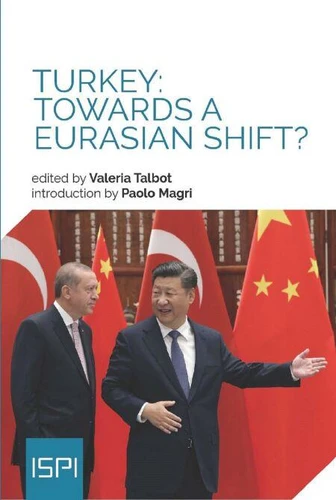
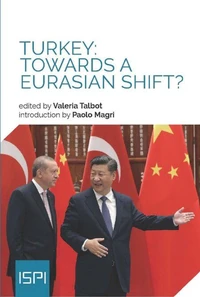
Turkey: Towards a Eurasian Shift?
Par :Formats :
Disponible dans votre compte client Decitre ou Furet du Nord dès validation de votre commande. Le format ePub est :
- Compatible avec une lecture sur My Vivlio (smartphone, tablette, ordinateur)
- Compatible avec une lecture sur liseuses Vivlio
- Pour les liseuses autres que Vivlio, vous devez utiliser le logiciel Adobe Digital Edition. Non compatible avec la lecture sur les liseuses Kindle, Remarkable et Sony
 , qui est-ce ?
Notre partenaire de plateforme de lecture numérique où vous retrouverez l'ensemble de vos ebooks gratuitement
Pour en savoir plus sur nos ebooks, consultez notre aide en ligne ici
C'est si simple ! Lisez votre ebook avec l'app Vivlio sur votre tablette, mobile ou ordinateur :

- FormatePub
- ISBN978-88-6705-763-4
- EAN9788867057634
- Date de parution28/05/2018
- Protection num.Digital Watermarking
- Taille572 Ko
- Infos supplémentairesepub
- ÉditeurLedizioni
Résumé
Over the last few years, Turkey seems to have embraced the East again. Ankara's closer relations with Eurasian countries go hand in hand with the global shift eastwards, towards the ever-growing and most dynamic region in the world. It is therefore the result of an increasing differentiation of Turkey's foreign relations, driven by strategic, economic and energy interests. Stronger ties with Eurasian countries, i.e.
Russia and China, are also the litmus test for the ups and downs in relations with Washington and Brussels. While Ankara still retains strong ties with the West, it is laying the groundwork to further widen its interests to the East. This report aims to analyse the multi-faceted aspects of Ankara's Eurasian shift, highlighting the domestic drivers of Turkey's "Eurasianism", the interests at stake, the areas of cooperation and competition, and last but not least the implications for the EU.
Russia and China, are also the litmus test for the ups and downs in relations with Washington and Brussels. While Ankara still retains strong ties with the West, it is laying the groundwork to further widen its interests to the East. This report aims to analyse the multi-faceted aspects of Ankara's Eurasian shift, highlighting the domestic drivers of Turkey's "Eurasianism", the interests at stake, the areas of cooperation and competition, and last but not least the implications for the EU.
A propos de Valeria Talbot

6,99 €