SOLDES
Jusqu'à -70% sur une sélection d'articles*

Nouveauté
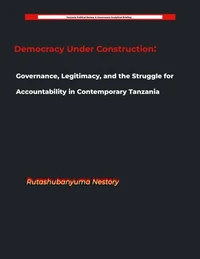
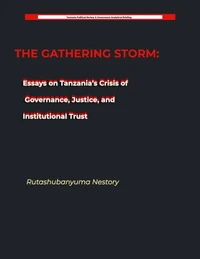
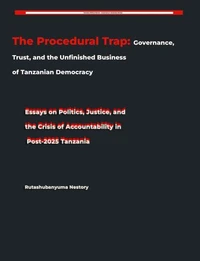
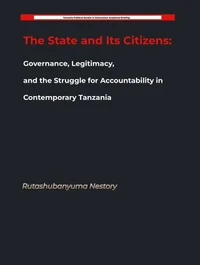
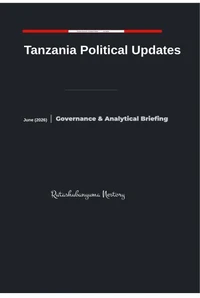
Tanzania Political Updates May (2026). Tanzania Political Updates, #5
Par :Formats :
Disponible dans votre compte client Decitre ou Furet du Nord dès validation de votre commande. Le format ePub est :
- Compatible avec une lecture sur My Vivlio (smartphone, tablette, ordinateur)
- Compatible avec une lecture sur liseuses Vivlio
- Pour les liseuses autres que Vivlio, vous devez utiliser le logiciel Adobe Digital Edition. Non compatible avec la lecture sur les liseuses Kindle, Remarkable et Sony
 , qui est-ce ?
Notre partenaire de plateforme de lecture numérique où vous retrouverez l'ensemble de vos ebooks gratuitement
Pour en savoir plus sur nos ebooks, consultez notre aide en ligne ici
C'est si simple ! Lisez votre ebook avec l'app Vivlio sur votre tablette, mobile ou ordinateur :

- FormatePub
- ISBN8235630895
- EAN9798235630895
- Date de parution23/05/2026
- Protection num.pas de protection
- Infos supplémentairesepub
- ÉditeurIoakim Ioakim
Résumé
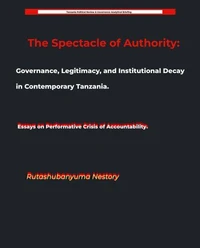
This book develops the concept of the handcuffed nation: a political order in which formal democratic institutions-constitutions, courts, elections, media systems, and civil society-remain intact but are systematically reconfigured to limit accountability and reproduce executive dominance. Unlike classical authoritarianism, the handcuffed nation does not dismantle institutions; it repurposes them.
Constitutional provisions (notably Article 41(7) of Tanzania's Constitution), regulatory frameworks, security architectures, and administrative practices function collectively to produce managed uncertainty: a condition in which political competition is visible but structurally constrained. Using Tanzania (2020-2025) as an empirical anchor, the book examines nine interconnected domains: judiciary and constitutionalism, media regulation, electoral governance, security institutions, identity and land regimes, regional diplomacy, mega-events (AFCON 2027), diaspora governance, and conditions for systemic change. The analysis argues that Tanzania's political stability is not accidental but engineered through interlocking mechanisms that are individually incomplete but collectively resilient.
These mechanisms are reinforced by a multi-polar international environment that reduces external leverage and enables strategic diversification of partners. The concluding chapter identifies structural conditions under which such systems may loosen: elite fragmentation, economic constraint, coordinated external pressure, and large-scale domestic mobilisation. However, it emphasizes that none of these conditions is presently sufficient in isolation.
Constitutional provisions (notably Article 41(7) of Tanzania's Constitution), regulatory frameworks, security architectures, and administrative practices function collectively to produce managed uncertainty: a condition in which political competition is visible but structurally constrained. Using Tanzania (2020-2025) as an empirical anchor, the book examines nine interconnected domains: judiciary and constitutionalism, media regulation, electoral governance, security institutions, identity and land regimes, regional diplomacy, mega-events (AFCON 2027), diaspora governance, and conditions for systemic change. The analysis argues that Tanzania's political stability is not accidental but engineered through interlocking mechanisms that are individually incomplete but collectively resilient.
These mechanisms are reinforced by a multi-polar international environment that reduces external leverage and enables strategic diversification of partners. The concluding chapter identifies structural conditions under which such systems may loosen: elite fragmentation, economic constraint, coordinated external pressure, and large-scale domestic mobilisation. However, it emphasizes that none of these conditions is presently sufficient in isolation.