SOLDES
Jusqu'à -70% sur une sélection d'articles*

Nouveauté
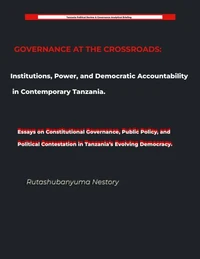
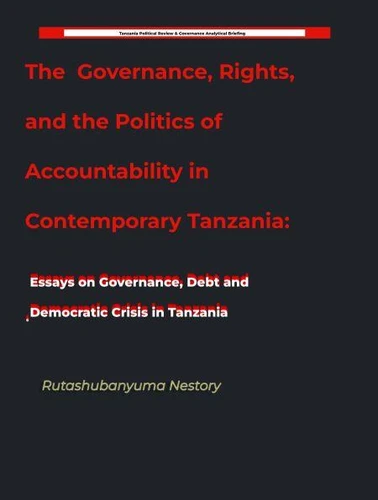
Governance, Rights, and the Politics of Accountability in Contemporary Tanzania
Par :Formats :
Disponible dans votre compte client Decitre ou Furet du Nord dès validation de votre commande. Le format ePub est :
- Compatible avec une lecture sur My Vivlio (smartphone, tablette, ordinateur)
- Compatible avec une lecture sur liseuses Vivlio
- Pour les liseuses autres que Vivlio, vous devez utiliser le logiciel Adobe Digital Edition. Non compatible avec la lecture sur les liseuses Kindle, Remarkable et Sony
 , qui est-ce ?
Notre partenaire de plateforme de lecture numérique où vous retrouverez l'ensemble de vos ebooks gratuitement
Pour en savoir plus sur nos ebooks, consultez notre aide en ligne ici
C'est si simple ! Lisez votre ebook avec l'app Vivlio sur votre tablette, mobile ou ordinateur :

- FormatePub
- ISBN8233377143
- EAN9798233377143
- Date de parution13/06/2026
- Protection num.pas de protection
- Infos supplémentairesepub
- ÉditeurLinda Balsamo
Résumé
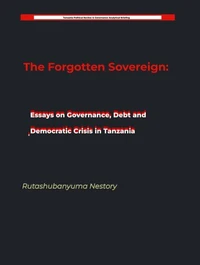
Governance, Rights, and the Politics of Accountability in Contemporary Tanzania provides a comprehensive examination of the constitutional, political, economic, and social forces shaping Tanzania's modern governance landscape. Across thirty-three chapters, the volume explores a wide range of issues: urban transformation and housing rights, constitutional tensions within the Union, land and resource governance, fiscal management, employment realities, financial inclusion, migration, institutional accountability, political communication, and democratic participation.
The central argument running through the collection is that governance is fundamentally a question of power, legitimacy, and accountability. Institutions determine how resources are distributed, whose interests are protected, how authority is exercised, and how citizens engage with the state. Rather than focusing on personalities or partisan narratives, the volume analyses structures, incentives, laws, and institutional practices.
It examines how governments justify authority, how citizens respond to exclusion or uncertainty, and how democratic systems manage competing demands for stability, development, and rights. Drawing from constitutional analysis, political economy, public administration, comparative governance, and human rights perspectives, the chapters place Tanzania's experiences within broader African and global debates while remaining attentive to the country's unique historical and institutional context.
The result is a critical but constructive contribution to discussions on governance, development, democracy, and justice in Tanzania and beyond.
The central argument running through the collection is that governance is fundamentally a question of power, legitimacy, and accountability. Institutions determine how resources are distributed, whose interests are protected, how authority is exercised, and how citizens engage with the state. Rather than focusing on personalities or partisan narratives, the volume analyses structures, incentives, laws, and institutional practices.
It examines how governments justify authority, how citizens respond to exclusion or uncertainty, and how democratic systems manage competing demands for stability, development, and rights. Drawing from constitutional analysis, political economy, public administration, comparative governance, and human rights perspectives, the chapters place Tanzania's experiences within broader African and global debates while remaining attentive to the country's unique historical and institutional context.
The result is a critical but constructive contribution to discussions on governance, development, democracy, and justice in Tanzania and beyond.