SOLDES
Jusqu'à -70% sur une sélection d'articles*

Nouveauté
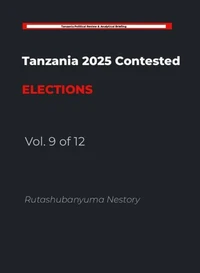
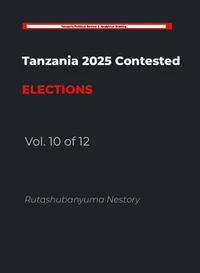
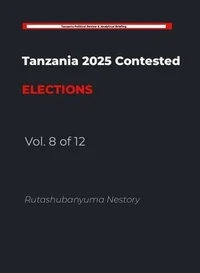
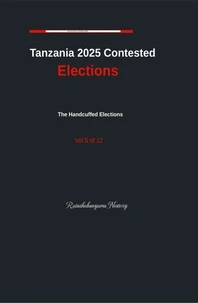
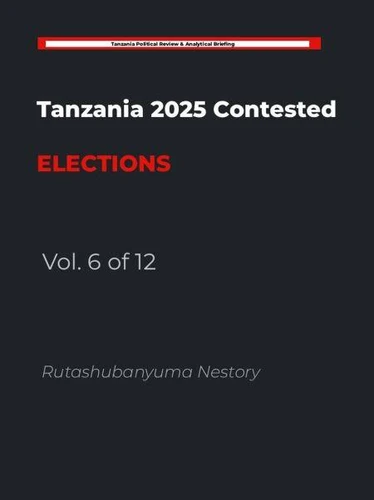
Tanzania 2025 Contested Elections - Vol. 6 of 12. Tanzania 2025 Contested Elections, #6
Par :Formats :
Disponible dans votre compte client Decitre ou Furet du Nord dès validation de votre commande. Le format ePub est :
- Compatible avec une lecture sur My Vivlio (smartphone, tablette, ordinateur)
- Compatible avec une lecture sur liseuses Vivlio
- Pour les liseuses autres que Vivlio, vous devez utiliser le logiciel Adobe Digital Edition. Non compatible avec la lecture sur les liseuses Kindle, Remarkable et Sony
 , qui est-ce ?
Notre partenaire de plateforme de lecture numérique où vous retrouverez l'ensemble de vos ebooks gratuitement
Pour en savoir plus sur nos ebooks, consultez notre aide en ligne ici
C'est si simple ! Lisez votre ebook avec l'app Vivlio sur votre tablette, mobile ou ordinateur :

- FormatePub
- ISBN8235961265
- EAN9798235961265
- Date de parution03/06/2026
- Protection num.pas de protection
- Infos supplémentairesepub
- ÉditeurIoakim Ioakim
Résumé
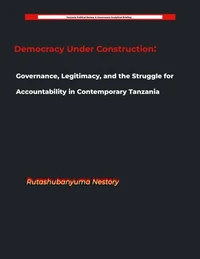
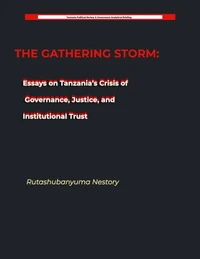
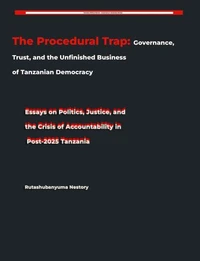
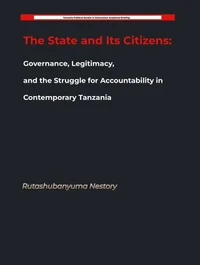
Tanzania 2025 Contested Elections: The Handcuffed Election, Volume 6 examines the political, legal, and institutional dynamics shaping Tanzania's pre-election environment ahead of the October 2025 general election. Drawing upon thirty-one analytical chapters, the volume explores the relationship between formal democratic continuity and the gradual contraction of substantive political competition. Three broad patterns emerge.
First, electoral competition narrows through opposition fragmentation, strategic defections, candidate disqualifications, and administrative decisions that reduce the range of viable political alternatives. Second, political expression increasingly shifts into informal arenas, including digital activism, social media discourse, artistic production, and protest mobilisation, where verified information frequently intersects with speculation, misinformation, and competing interpretations.
Third, institutions such as courts, religious organisations, electoral authorities, and security agencies attempt to preserve formal neutrality while navigating growing political sensitivity and public scrutiny. The volume examines a diverse range of developments, including electoral disputes, voter cynicism, political defections, judicial interventions, alleged enforced disappearances, civic-space restrictions, religious engagement in politics, infrastructure-related protests, digital information disorder, and emerging forms of institutional stress.
Across these cases, recurring tensions appear between legality and legitimacy, procedural compliance and public trust, and institutional continuity and democratic accountability.
First, electoral competition narrows through opposition fragmentation, strategic defections, candidate disqualifications, and administrative decisions that reduce the range of viable political alternatives. Second, political expression increasingly shifts into informal arenas, including digital activism, social media discourse, artistic production, and protest mobilisation, where verified information frequently intersects with speculation, misinformation, and competing interpretations.
Third, institutions such as courts, religious organisations, electoral authorities, and security agencies attempt to preserve formal neutrality while navigating growing political sensitivity and public scrutiny. The volume examines a diverse range of developments, including electoral disputes, voter cynicism, political defections, judicial interventions, alleged enforced disappearances, civic-space restrictions, religious engagement in politics, infrastructure-related protests, digital information disorder, and emerging forms of institutional stress.
Across these cases, recurring tensions appear between legality and legitimacy, procedural compliance and public trust, and institutional continuity and democratic accountability.