SOLDES
Jusqu'à -70% sur une sélection d'articles*

Nouveauté
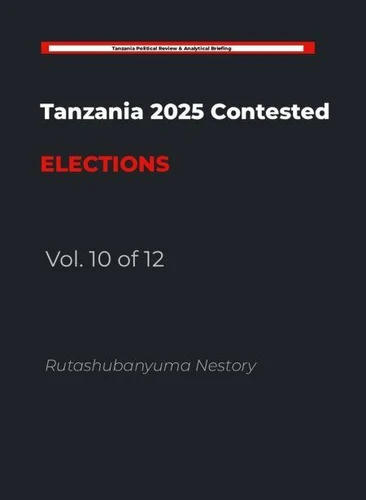
THE HANDCUFFED ELECTION: Tanzania's 2025 General Election: A Study in Institutional Constraint and Democratic Contestation. Tanzania 2025 Contested Elections, #10
Par :Formats :
Disponible dans votre compte client Decitre ou Furet du Nord dès validation de votre commande. Le format ePub est :
- Compatible avec une lecture sur My Vivlio (smartphone, tablette, ordinateur)
- Compatible avec une lecture sur liseuses Vivlio
- Pour les liseuses autres que Vivlio, vous devez utiliser le logiciel Adobe Digital Edition. Non compatible avec la lecture sur les liseuses Kindle, Remarkable et Sony
 , qui est-ce ?
Notre partenaire de plateforme de lecture numérique où vous retrouverez l'ensemble de vos ebooks gratuitement
Pour en savoir plus sur nos ebooks, consultez notre aide en ligne ici
C'est si simple ! Lisez votre ebook avec l'app Vivlio sur votre tablette, mobile ou ordinateur :

- FormatePub
- ISBN8231401895
- EAN9798231401895
- Date de parution25/06/2026
- Protection num.pas de protection
- Infos supplémentairesepub
- ÉditeurWalzone Press
Résumé
Tanzania's 2025 General Election unfolded as a moment of striking contradiction. The economy recorded average growth of approximately 6 percent, yet youth unemployment and underemployment remained persistent. Courts issued rulings on digital forensic evidence that significantly weakened the prosecution's case against opposition leader Tundu Lissu, yet he remained in custody on treason charges. Eighteen political parties participated in the electoral process, yet key opposition actors were disqualified.
International observers noted limited electoral disruption, yet concluded that the process "fell short" of regional democratic standards. In this tenth volume of a twelve-part series, Rutashubanyuma Nestory examines Tanzania's 2025 election as a case of institutional constraint and interpretive fragmentation. Drawing on legal proceedings, macroeconomic data, human rights reporting, electoral observation missions, and political analysis, the volume argues that Tanzania's political system remains procedurally functional while its legitimacy is increasingly contested.
Across its chapters, the book explores:The evidentiary crisis in the treason trial of Tundu Lissu, where technically credible digital evidence was excluded on procedural groundsThe paradox of economic growth without inclusive employment, shaped by skills mismatches, sectoral concentration, and demographic pressureThe post-election human rights allegations documented by international organizations, raising urgent questions of accountability and state violenceThe postponement of Maasai circumcision rituals to enable youth voting, illustrating the adaptation of cultural systems to democratic participationThe SADC Electoral Observation Mission's conclusion that voters "could not express their democratic will"The contested role of the diaspora as both development partners and critical political actorsThe unconventional campaign rhetoric in Zanzibar's presidential race, reflecting the symbolic breadth-and occasional absurdity-of electoral politicsAt its core, this volume advances a central thesis: Tanzania's 2025 election is best understood not as a single contest for power, but as a struggle over the meaning of the state itself.
The struggle is not only over votes, but over interpretation-who defines governance, who benefits from it, and who holds authority over its narrative. Whether these competing narratives converge or further fragment will shape Tanzania's political trajectory well beyond the 2025 electoral cycle. This volume is essential reading for scholars, policymakers, journalists, and citizens seeking to understand the evolving nature of democratic governance in contemporary Africa.
International observers noted limited electoral disruption, yet concluded that the process "fell short" of regional democratic standards. In this tenth volume of a twelve-part series, Rutashubanyuma Nestory examines Tanzania's 2025 election as a case of institutional constraint and interpretive fragmentation. Drawing on legal proceedings, macroeconomic data, human rights reporting, electoral observation missions, and political analysis, the volume argues that Tanzania's political system remains procedurally functional while its legitimacy is increasingly contested.
Across its chapters, the book explores:The evidentiary crisis in the treason trial of Tundu Lissu, where technically credible digital evidence was excluded on procedural groundsThe paradox of economic growth without inclusive employment, shaped by skills mismatches, sectoral concentration, and demographic pressureThe post-election human rights allegations documented by international organizations, raising urgent questions of accountability and state violenceThe postponement of Maasai circumcision rituals to enable youth voting, illustrating the adaptation of cultural systems to democratic participationThe SADC Electoral Observation Mission's conclusion that voters "could not express their democratic will"The contested role of the diaspora as both development partners and critical political actorsThe unconventional campaign rhetoric in Zanzibar's presidential race, reflecting the symbolic breadth-and occasional absurdity-of electoral politicsAt its core, this volume advances a central thesis: Tanzania's 2025 election is best understood not as a single contest for power, but as a struggle over the meaning of the state itself.
The struggle is not only over votes, but over interpretation-who defines governance, who benefits from it, and who holds authority over its narrative. Whether these competing narratives converge or further fragment will shape Tanzania's political trajectory well beyond the 2025 electoral cycle. This volume is essential reading for scholars, policymakers, journalists, and citizens seeking to understand the evolving nature of democratic governance in contemporary Africa.