SOLDES
Jusqu'à -70% sur une sélection d'articles*

Nouveauté
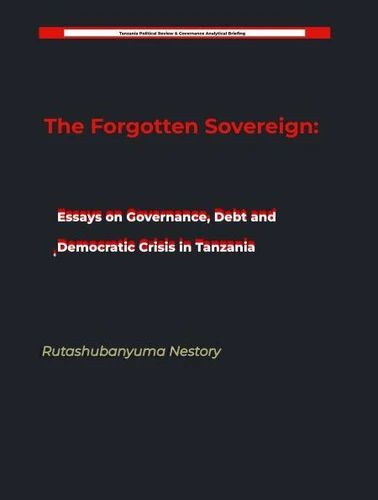
The Forgotten Sovereign: Essays on Governance, Debt, and Democratic Crisis in Tanzania
Par :Formats :
Disponible dans votre compte client Decitre ou Furet du Nord dès validation de votre commande. Le format ePub est :
- Compatible avec une lecture sur My Vivlio (smartphone, tablette, ordinateur)
- Compatible avec une lecture sur liseuses Vivlio
- Pour les liseuses autres que Vivlio, vous devez utiliser le logiciel Adobe Digital Edition. Non compatible avec la lecture sur les liseuses Kindle, Remarkable et Sony
 , qui est-ce ?
Notre partenaire de plateforme de lecture numérique où vous retrouverez l'ensemble de vos ebooks gratuitement
Pour en savoir plus sur nos ebooks, consultez notre aide en ligne ici
C'est si simple ! Lisez votre ebook avec l'app Vivlio sur votre tablette, mobile ou ordinateur :

- FormatePub
- ISBN8233170744
- EAN9798233170744
- Date de parution13/06/2026
- Protection num.pas de protection
- Infos supplémentairesepub
- ÉditeurLinda Balsamo
Résumé
The Forgotten Sovereign: Essays on Governance, Debt, and Democratic Crisis in TanzaniaThis collection of analytical essays examines Tanzania's contemporary governance challenges through the interconnected lenses of development, constitutional rights, political institutions, public finance, and democratic accountability. Written during a period of heightened political debate between 2025 and 2026, the book moves beyond surface-level explanations to explore deeper institutional dynamics shaping Tanzania's political and economic trajectory.
The central argument of the collection is that Tanzania's major challenges cannot be explained primarily by lack of resources, geography, or national potential. Instead, they emerge from the persistent gap between institutional design and institutional practice. The chapters examine how this gap appears across multiple areas: Electoral institutions struggle to maintain public confidence when independence is questioned.
Judicial reform faces limitations when institutional foundations remain vulnerable. Public debt debates reveal tensions between economic expansion and fiscal sustainability. Security strategies designed to maintain order can generate mistrust when communication and accountability are weak. Digital restrictions often address visible conflicts while leaving deeper political-economic pressures unresolved.
Infrastructure investments raise questions about transparency, planning, and public value. Political competition is increasingly shaped by economic insecurity, patronage networks, and struggles over access to opportunity. The collection argues that development success depends not simply on resources but on institutional quality. The Singapore experience cannot be replicated without comparable discipline in governance and state capacity.
Technological progress requires human capital. Debt sustainability requires productive investment. Democratic stability requires credible institutions. The book concludes that Tanzania's fundamental challenge is the reconstruction of the relationship between citizens and the state. The forgotten sovereign-the ordinary citizen-must move from being a passive observer of national affairs to an active participant capable of demanding accountability, exercising constitutional rights, and contributing to a more inclusive national future.
The central argument of the collection is that Tanzania's major challenges cannot be explained primarily by lack of resources, geography, or national potential. Instead, they emerge from the persistent gap between institutional design and institutional practice. The chapters examine how this gap appears across multiple areas: Electoral institutions struggle to maintain public confidence when independence is questioned.
Judicial reform faces limitations when institutional foundations remain vulnerable. Public debt debates reveal tensions between economic expansion and fiscal sustainability. Security strategies designed to maintain order can generate mistrust when communication and accountability are weak. Digital restrictions often address visible conflicts while leaving deeper political-economic pressures unresolved.
Infrastructure investments raise questions about transparency, planning, and public value. Political competition is increasingly shaped by economic insecurity, patronage networks, and struggles over access to opportunity. The collection argues that development success depends not simply on resources but on institutional quality. The Singapore experience cannot be replicated without comparable discipline in governance and state capacity.
Technological progress requires human capital. Debt sustainability requires productive investment. Democratic stability requires credible institutions. The book concludes that Tanzania's fundamental challenge is the reconstruction of the relationship between citizens and the state. The forgotten sovereign-the ordinary citizen-must move from being a passive observer of national affairs to an active participant capable of demanding accountability, exercising constitutional rights, and contributing to a more inclusive national future.