SOLDES
Jusqu'à -70% sur une sélection d'articles*

Nouveauté
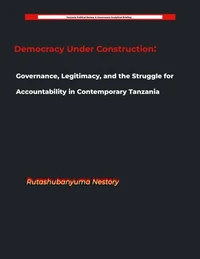
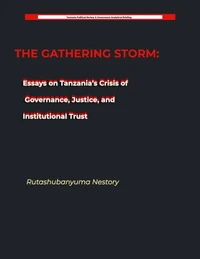
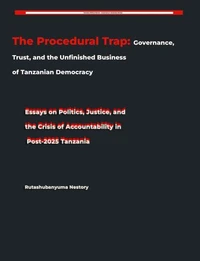
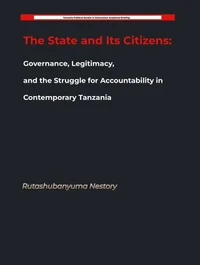
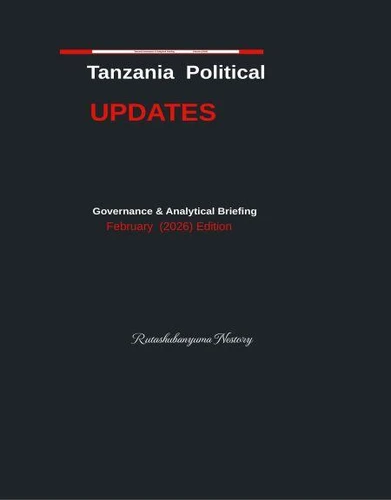
Tanzania Political Updates February (2026). Tanzania Political Updates, #2
Par :Formats :
Disponible dans votre compte client Decitre ou Furet du Nord dès validation de votre commande. Le format ePub est :
- Compatible avec une lecture sur My Vivlio (smartphone, tablette, ordinateur)
- Compatible avec une lecture sur liseuses Vivlio
- Pour les liseuses autres que Vivlio, vous devez utiliser le logiciel Adobe Digital Edition. Non compatible avec la lecture sur les liseuses Kindle, Remarkable et Sony
 , qui est-ce ?
Notre partenaire de plateforme de lecture numérique où vous retrouverez l'ensemble de vos ebooks gratuitement
Pour en savoir plus sur nos ebooks, consultez notre aide en ligne ici
C'est si simple ! Lisez votre ebook avec l'app Vivlio sur votre tablette, mobile ou ordinateur :

- FormatePub
- ISBN8235717244
- EAN9798235717244
- Date de parution21/05/2026
- Protection num.pas de protection
- Infos supplémentairesepub
- ÉditeurIoakim Ioakim
Résumé
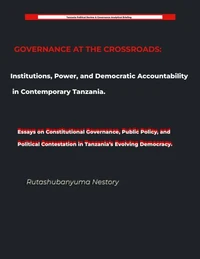
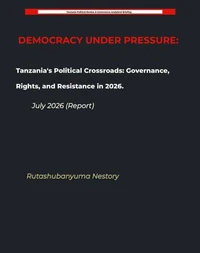
The briefings compiled in this volume were written between January and March 2026, in the aftermath of Tanzania's disputed 2025 general elections. The period was marked by heightened political reflection, competing narratives of legitimacy, and renewed debate over the relationship between state authority, accountability, and reconciliation. This book does not claim finality of interpretation. Instead, it seeks to clarify recurring questions that have become central to Tanzania's political trajectory: How does a state that once demonstrated capacity for internal accountability-such as during the 1976 Shinyanga crisis-struggle to reproduce that capacity in the present era? Why does external validation increasingly appear to substitute for domestic legitimacy? And what happens to political order when land, survival, and necessity begin to displace inherited patterns of political loyalty? These questions are not confined to academic debate.
They are actively present in public discourse across rural communities, urban centers, digital platforms, and institutional spaces. The role of this work is therefore not to provide definitive answers, but to structure inquiry in a way that distinguishes evidence from speculation and analysis from partisan framing. These questions are not confined to academic debate. They are actively present in public discourse across rural communities, urban centers, digital platforms, and institutional spaces.
The role of this work is therefore not to provide definitive answers, but to structure inquiry in a way that distinguishes evidence from speculation and analysis from partisan framing. The tone adopted throughout is deliberately restrained. In politically polarized environments, analysis often collapses into either defensive justification or categorical condemnation. This work attempts to avoid both.
The governing party is subject to scrutiny not as an exceptional case, but because all political power requires accountability. Opposition actors are treated with the same analytical standards, because democratic systems require that all potential governing forces be evaluated consistently. What follows is offered as a contribution to public reasoning in a moment of national uncertainty.
They are actively present in public discourse across rural communities, urban centers, digital platforms, and institutional spaces. The role of this work is therefore not to provide definitive answers, but to structure inquiry in a way that distinguishes evidence from speculation and analysis from partisan framing. These questions are not confined to academic debate. They are actively present in public discourse across rural communities, urban centers, digital platforms, and institutional spaces.
The role of this work is therefore not to provide definitive answers, but to structure inquiry in a way that distinguishes evidence from speculation and analysis from partisan framing. The tone adopted throughout is deliberately restrained. In politically polarized environments, analysis often collapses into either defensive justification or categorical condemnation. This work attempts to avoid both.
The governing party is subject to scrutiny not as an exceptional case, but because all political power requires accountability. Opposition actors are treated with the same analytical standards, because democratic systems require that all potential governing forces be evaluated consistently. What follows is offered as a contribution to public reasoning in a moment of national uncertainty.