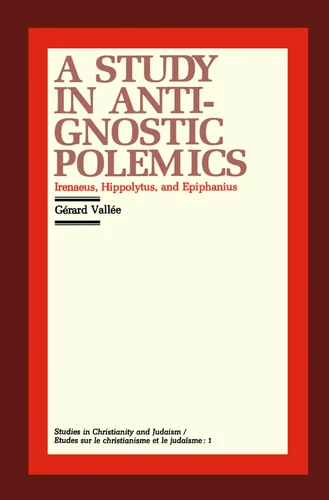
Gnostic beliefs presented themselves as a major challenge to Irenaeus of Lyons (Against Heresies, ca. A. D. 180), Hippolytus of Rome (the presumed author of the Elenchos Against All Heresies, post-A. D. 222), and Epiphanius of Salamis (Panarion, A. D. 374-77). What was at stake for them were life-and-death issues; the nature of Christianity and the question of truth. While recent manuscript finds shed new light on gnostic thought, the writings of the heresiologists are still indispensable-for knowledge of gnostic teaching but also of "what certain influential authors in the emergence of catholic Christianity considered ...
the pivotal point on which Christianity would stand or fall." The writings of these three heresiologists, observes Vallée, offer "excellent illustrations of what heresiology was in three successive centuries" and how it developed. Their influence on the style of Christian polemics was decisive and lasting. Valllée analyzes the arguments of each of the three heresiologists in order to discern the central concerns of each.
Gnostic beliefs presented themselves as a major challenge to Irenaeus of Lyons (Against Heresies, ca. A. D. 180), Hippolytus of Rome (the presumed author of the Elenchos Against All Heresies, post-A. D. 222), and Epiphanius of Salamis (Panarion, A. D. 374-77). What was at stake for them were life-and-death issues; the nature of Christianity and the question of truth. While recent manuscript finds shed new light on gnostic thought, the writings of the heresiologists are still indispensable-for knowledge of gnostic teaching but also of "what certain influential authors in the emergence of catholic Christianity considered ...
the pivotal point on which Christianity would stand or fall." The writings of these three heresiologists, observes Vallée, offer "excellent illustrations of what heresiology was in three successive centuries" and how it developed. Their influence on the style of Christian polemics was decisive and lasting. Valllée analyzes the arguments of each of the three heresiologists in order to discern the central concerns of each.