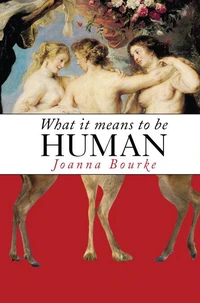
In 1872, a woman known only as 'An Ernest Englishwoman' published an open letter entitled 'Are women animals?', in which she protested the fact that women were not treated as fully human. In reality, their status was worse than that of animals: regulations prohibiting cruelty against dogs, horses and cattle were significantly more punitive than laws against cruelty to women. What does it mean to be 'human' rather than 'animal'? If the Ernest Englishwoman had turned her gaze to the previous century, her critique could equally have applied to slaves.
In her time and beyond, the debate around human status involved questions of language, facial physiology, and vegetarianism. If she had been capable of looking 100 years into the future, she might have wondered about chimeras, created by transplanting animal fluids and organs into human bodies, or the ethics of stem cell research. In this meticulously researched, wide-ranging and illuminating book, Joanna Bourke explores the legacy of more than two centuries, and looks forward to what the future might hold for humans and animals.
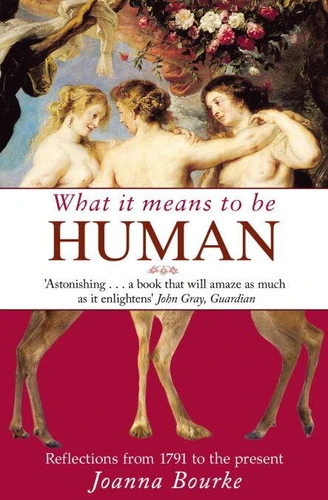
In 1872, a woman known only as 'An Ernest Englishwoman' published an open letter entitled 'Are women animals?', in which she protested the fact that women were not treated as fully human. In reality, their status was worse than that of animals: regulations prohibiting cruelty against dogs, horses and cattle were significantly more punitive than laws against cruelty to women. What does it mean to be 'human' rather than 'animal'? If the Ernest Englishwoman had turned her gaze to the previous century, her critique could equally have applied to slaves.
In her time and beyond, the debate around human status involved questions of language, facial physiology, and vegetarianism. If she had been capable of looking 100 years into the future, she might have wondered about chimeras, created by transplanting animal fluids and organs into human bodies, or the ethics of stem cell research. In this meticulously researched, wide-ranging and illuminating book, Joanna Bourke explores the legacy of more than two centuries, and looks forward to what the future might hold for humans and animals.

 , qui est-ce ?