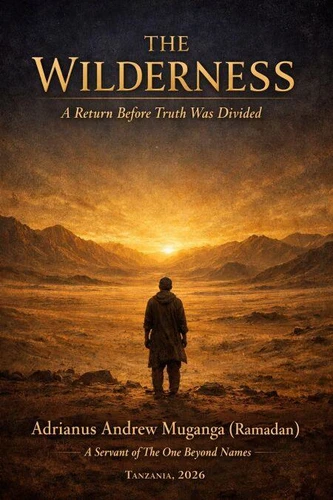
The Wilderness: A Return Before Truth Was Divided. 18, #18
Par :Formats :
Disponible dans votre compte client Decitre ou Furet du Nord dès validation de votre commande. Le format ePub est :
- Compatible avec une lecture sur My Vivlio (smartphone, tablette, ordinateur)
- Compatible avec une lecture sur liseuses Vivlio
- Pour les liseuses autres que Vivlio, vous devez utiliser le logiciel Adobe Digital Edition. Non compatible avec la lecture sur les liseuses Kindle, Remarkable et Sony
 , qui est-ce ?
Notre partenaire de plateforme de lecture numérique où vous retrouverez l'ensemble de vos ebooks gratuitement
Pour en savoir plus sur nos ebooks, consultez notre aide en ligne ici
C'est si simple ! Lisez votre ebook avec l'app Vivlio sur votre tablette, mobile ou ordinateur :

- FormatePub
- ISBN978-1-105-75319-0
- EAN9781105753190
- Date de parution24/01/2026
- Protection num.pas de protection
- Infos supplémentairesepub
- ÉditeurLulu.com
Résumé
The Wilderness: A Return Before Truth Was Divided is a reflective work on human formation, responsibility, and authority in an age where inherited certainty no longer holds. It does not present doctrine, self-help, or spiritual instruction. Instead, it examines the wilderness as a necessary condition that emerges when belief systems, identities, and structures collapse under the weight of responsibility they were never formed to carry.
The book traces a clear movement: trust, fracture, exile, formation, authority, completion, and return. It argues that collapse is not failure but exposure, revealing where authority has separated from responsibility and power from restraint. The wilderness is shown not as punishment or escape, but as a structured environment that removes false supports so truth can be carried without distortion. Figures such as Adam, Joseph, and Muhammad appear not as objects of devotion or theological debate, but as structural examples of formation under pressure.
Their experiences illustrate how delay, silence, isolation, and loss prepare a human being to act without ego, entitlement, or domination. Written for those who must remain present in the world without borrowed certainty, the book refuses comfort, spiritual status, and ideological alignment. Its purpose is orientation rather than persuasion: to clarify what remains when explanations fail, authority dissolves, and identity can no longer serve as shelter.
The book traces a clear movement: trust, fracture, exile, formation, authority, completion, and return. It argues that collapse is not failure but exposure, revealing where authority has separated from responsibility and power from restraint. The wilderness is shown not as punishment or escape, but as a structured environment that removes false supports so truth can be carried without distortion. Figures such as Adam, Joseph, and Muhammad appear not as objects of devotion or theological debate, but as structural examples of formation under pressure.
Their experiences illustrate how delay, silence, isolation, and loss prepare a human being to act without ego, entitlement, or domination. Written for those who must remain present in the world without borrowed certainty, the book refuses comfort, spiritual status, and ideological alignment. Its purpose is orientation rather than persuasion: to clarify what remains when explanations fail, authority dissolves, and identity can no longer serve as shelter.
A propos de Adrianus Andrew Muganga (Ramad

0,99 €
0,99 €