SOLDES
Jusqu'à -70% sur une sélection d'articles*

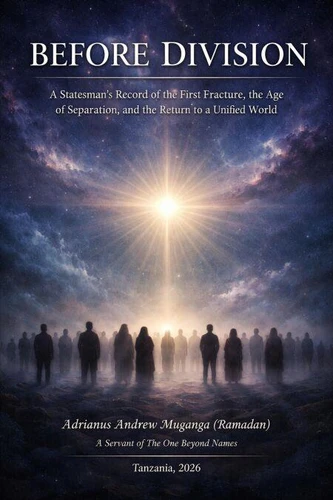
Before Division: A Statesman’s Record of the First Fracture, the Age of Separation, and the Return to a Unified World. 28, #28
Par :Formats :
Disponible dans votre compte client Decitre ou Furet du Nord dès validation de votre commande. Le format ePub est :
- Compatible avec une lecture sur My Vivlio (smartphone, tablette, ordinateur)
- Compatible avec une lecture sur liseuses Vivlio
- Pour les liseuses autres que Vivlio, vous devez utiliser le logiciel Adobe Digital Edition. Non compatible avec la lecture sur les liseuses Kindle, Remarkable et Sony
 , qui est-ce ?
Notre partenaire de plateforme de lecture numérique où vous retrouverez l'ensemble de vos ebooks gratuitement
Pour en savoir plus sur nos ebooks, consultez notre aide en ligne ici
C'est si simple ! Lisez votre ebook avec l'app Vivlio sur votre tablette, mobile ou ordinateur :

- FormatePub
- ISBN978-1-105-44000-7
- EAN9781105440007
- Date de parution03/04/2026
- Protection num.pas de protection
- Infos supplémentairesepub
- ÉditeurLulu.com
Résumé
Before Division: A Statesman's Record of the First Fracture, the Age of Separation, and the Return to a Unified WorldThis book presents a structured philosophical examination of how human division originates, expands, and can be resolved. It begins from a point that precedes identity, exploring the condition of human perception before it is shaped by labels such as religion, culture, or ideology. From this foundation, the work traces the first fracture, a gradual shift in awareness where interpretation replaces direct observation, giving rise to identity, comparison, and separation.
As societies develop, these patterns become embedded in systems of belief, institutions, and traditions. The book analyzes how division is reinforced over time through authority structures, inherited assumptions, and competing interpretations of truth. By identifying recurring patterns across different traditions and historical developments, it demonstrates that division is not inherent to humanity, but constructed through misaligned perception.
The work also examines why attempts at unity have often remained limited. Efforts such as dialogue and reform frequently operate within the same identity-based frameworks that produce division, preventing deeper resolution. In response, the book introduces the concept of alignment with reality, where perception, understanding, and action correspond directly to what is real rather than to constructed interpretations.
Moving beyond critique, the text outlines a path toward clarity and coherence. It distinguishes between difference and division, showing that diversity can exist without conflict when it is not tied to superiority or exclusivity. The book concludes by exploring the possibility of a unified human framework grounded in shared reality, where systems function without contradiction and cooperation replaces separation.
This work is not written to promote a belief or defend a position. It is intended as both a record and a tool, inviting readers to examine assumptions, test conclusions, and engage directly with the structures that shape human thought and interaction.
As societies develop, these patterns become embedded in systems of belief, institutions, and traditions. The book analyzes how division is reinforced over time through authority structures, inherited assumptions, and competing interpretations of truth. By identifying recurring patterns across different traditions and historical developments, it demonstrates that division is not inherent to humanity, but constructed through misaligned perception.
The work also examines why attempts at unity have often remained limited. Efforts such as dialogue and reform frequently operate within the same identity-based frameworks that produce division, preventing deeper resolution. In response, the book introduces the concept of alignment with reality, where perception, understanding, and action correspond directly to what is real rather than to constructed interpretations.
Moving beyond critique, the text outlines a path toward clarity and coherence. It distinguishes between difference and division, showing that diversity can exist without conflict when it is not tied to superiority or exclusivity. The book concludes by exploring the possibility of a unified human framework grounded in shared reality, where systems function without contradiction and cooperation replaces separation.
This work is not written to promote a belief or defend a position. It is intended as both a record and a tool, inviting readers to examine assumptions, test conclusions, and engage directly with the structures that shape human thought and interaction.
A propos de Adrianus Andrew Muganga (Ramad






0,99 €

0,99 €