SOLDES
Jusqu'à -70% sur une sélection d'articles*

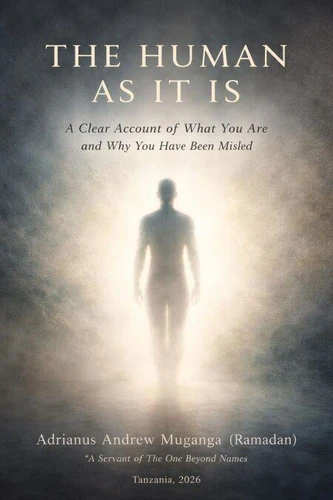
The Human As It Is: A Clear Account of What You Are and Why You Have Been Misled. 32, #32
Par :Formats :
Disponible dans votre compte client Decitre ou Furet du Nord dès validation de votre commande. Le format ePub est :
- Compatible avec une lecture sur My Vivlio (smartphone, tablette, ordinateur)
- Compatible avec une lecture sur liseuses Vivlio
- Pour les liseuses autres que Vivlio, vous devez utiliser le logiciel Adobe Digital Edition. Non compatible avec la lecture sur les liseuses Kindle, Remarkable et Sony
 , qui est-ce ?
Notre partenaire de plateforme de lecture numérique où vous retrouverez l'ensemble de vos ebooks gratuitement
Pour en savoir plus sur nos ebooks, consultez notre aide en ligne ici
C'est si simple ! Lisez votre ebook avec l'app Vivlio sur votre tablette, mobile ou ordinateur :

- FormatePub
- ISBN978-1-105-39255-9
- EAN9781105392559
- Date de parution19/04/2026
- Protection num.pas de protection
- Infos supplémentairesepub
- ÉditeurLulu.com
Résumé
THE HUMAN AS IT IS: A Clear Account of What You Are and Why You Have Been Misled examines human nature through direct observation rather than belief, theory, or ideology. It focuses on identity, thought, and perception as they appear in everyday experience, questioning the assumptions that shape the sense of self. The book explores psychological conditioning and how it influences behavior, emotion, and understanding.
It looks at fear, desire, control, and belief as active processes that sustain inner conflict and confusion. These are presented not as concepts to analyze, but as movements that can be observed directly. A central theme is the role of thought in constructing a narrative of identity. This narrative is often taken to be real and stable, yet the book suggests it is built from memory, language, and repetition.
Perception is also examined, showing how it is commonly filtered through prior knowledge and belief, limiting clarity. The writing is structured, clear, and free of authority. It does not offer methods, solutions, or conclusions. Instead, it presents what can be seen when interpretation is set aside. This work invites the reader to observe without assumption, without conclusion, and without the need to agree or disagree.
It looks at fear, desire, control, and belief as active processes that sustain inner conflict and confusion. These are presented not as concepts to analyze, but as movements that can be observed directly. A central theme is the role of thought in constructing a narrative of identity. This narrative is often taken to be real and stable, yet the book suggests it is built from memory, language, and repetition.
Perception is also examined, showing how it is commonly filtered through prior knowledge and belief, limiting clarity. The writing is structured, clear, and free of authority. It does not offer methods, solutions, or conclusions. Instead, it presents what can be seen when interpretation is set aside. This work invites the reader to observe without assumption, without conclusion, and without the need to agree or disagree.
A propos de Adrianus Andrew Muganga (Ramad









0,99 €




0,99 €