SOLDES
Jusqu'à -70% sur une sélection d'articles*

Nouveauté
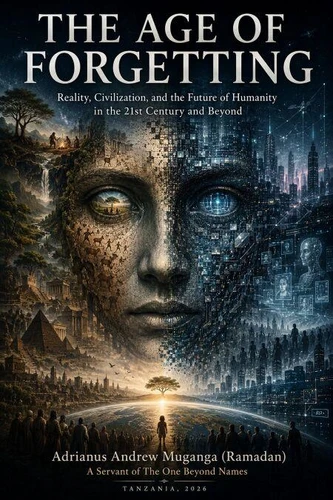
The Age of Forgetting: Reality, Civilization, and the Future of Humanity in the 21st Century and Beyond.. 37, #37
Par :Formats :
Disponible dans votre compte client Decitre ou Furet du Nord dès validation de votre commande. Le format ePub est :
- Compatible avec une lecture sur My Vivlio (smartphone, tablette, ordinateur)
- Compatible avec une lecture sur liseuses Vivlio
- Pour les liseuses autres que Vivlio, vous devez utiliser le logiciel Adobe Digital Edition. Non compatible avec la lecture sur les liseuses Kindle, Remarkable et Sony
 , qui est-ce ?
Notre partenaire de plateforme de lecture numérique où vous retrouverez l'ensemble de vos ebooks gratuitement
Pour en savoir plus sur nos ebooks, consultez notre aide en ligne ici
C'est si simple ! Lisez votre ebook avec l'app Vivlio sur votre tablette, mobile ou ordinateur :

- FormatePub
- ISBN978-1-105-30156-8
- EAN9781105301568
- Date de parution16/05/2026
- Protection num.pas de protection
- Infos supplémentairesepub
- ÉditeurLulu.com
Résumé
The Age of Forgetting: Reality, Civilization, and the Future of Humanity in the 21st Century and Beyond is a major civilizational examination of humanity during one of the most transformative periods in recorded history. Moving across human history, psychology, technology, demography, systems theory, and the future of civilization itself, this work explores how modern societies are being reshaped by technological acceleration, artificial intelligence, digital fragmentation, synthetic environments, weakening continuity structures, and the growing separation between human beings and the realities that historically sustained civilization across generations.
Rather than approaching the modern world through ideology, political tribalism, or simplified cultural conflict, this book examines humanity as one interconnected civilizational story extending from early Homo sapiens to the emerging planetary civilization of the twenty-first century and beyond. It investigates the long-range patterns that shaped human survival, cooperation, meaning, identity, family structures, social cohesion, and intergenerational continuity throughout history while asking whether those sustaining foundations can survive under conditions of unprecedented technological acceleration and psychological transformation.
Across twenty-one chapters, the book examines industrial civilization, digital culture, algorithmic systems, attention economies, loneliness, identity fragmentation, institutional distrust, demographic instability, artificial relationships, technological dependency, and the future worlds humanity may enter by 2050 and 2100. It explores how accelerating systems are reshaping childhood, education, governance, emotional life, human connection, moral frameworks, and civilization itself at planetary scale.
The work also examines the principles necessary for civilizational healing, continuity, balance, responsibility, and long-term survival. It asks urgent questions facing humanity's future: Can civilization remain psychologically stable while increasingly mediated by artificial systems? Can technological capability remain aligned with wisdom and human dignity? Can societies preserve meaning, relationship, continuity, and truth in an age of permanent stimulation and accelerating fragmentation?Written in a calm, observational, evidence-centered, and globally civilizational style, The Age of Forgetting is not a work of ideological warfare, fear, or condemnation.
It is a long-range civilizational mirror intended to help humanity observe itself more clearly before the consequences of disconnection, fragmentation, and forgetting become irreversible across future generations.
Rather than approaching the modern world through ideology, political tribalism, or simplified cultural conflict, this book examines humanity as one interconnected civilizational story extending from early Homo sapiens to the emerging planetary civilization of the twenty-first century and beyond. It investigates the long-range patterns that shaped human survival, cooperation, meaning, identity, family structures, social cohesion, and intergenerational continuity throughout history while asking whether those sustaining foundations can survive under conditions of unprecedented technological acceleration and psychological transformation.
Across twenty-one chapters, the book examines industrial civilization, digital culture, algorithmic systems, attention economies, loneliness, identity fragmentation, institutional distrust, demographic instability, artificial relationships, technological dependency, and the future worlds humanity may enter by 2050 and 2100. It explores how accelerating systems are reshaping childhood, education, governance, emotional life, human connection, moral frameworks, and civilization itself at planetary scale.
The work also examines the principles necessary for civilizational healing, continuity, balance, responsibility, and long-term survival. It asks urgent questions facing humanity's future: Can civilization remain psychologically stable while increasingly mediated by artificial systems? Can technological capability remain aligned with wisdom and human dignity? Can societies preserve meaning, relationship, continuity, and truth in an age of permanent stimulation and accelerating fragmentation?Written in a calm, observational, evidence-centered, and globally civilizational style, The Age of Forgetting is not a work of ideological warfare, fear, or condemnation.
It is a long-range civilizational mirror intended to help humanity observe itself more clearly before the consequences of disconnection, fragmentation, and forgetting become irreversible across future generations.
A propos de Adrianus Andrew Muganga (Ramad







0,99 €


0,99 €