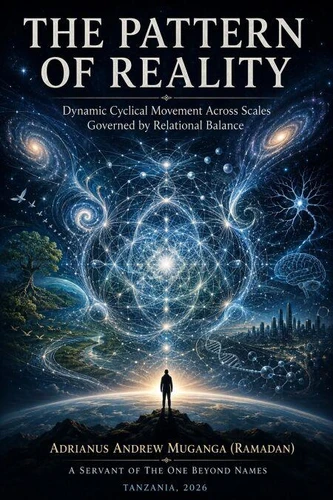
The Pattern Of Reality: Dynamic Cyclical Movement Across Scales Governed By Relational Balance. 40, #40
Par :Formats :
Disponible dans votre compte client Decitre ou Furet du Nord dès validation de votre commande. Le format ePub est :
- Compatible avec une lecture sur My Vivlio (smartphone, tablette, ordinateur)
- Compatible avec une lecture sur liseuses Vivlio
- Pour les liseuses autres que Vivlio, vous devez utiliser le logiciel Adobe Digital Edition. Non compatible avec la lecture sur les liseuses Kindle, Remarkable et Sony
 , qui est-ce ?
Notre partenaire de plateforme de lecture numérique où vous retrouverez l'ensemble de vos ebooks gratuitement
Pour en savoir plus sur nos ebooks, consultez notre aide en ligne ici
C'est si simple ! Lisez votre ebook avec l'app Vivlio sur votre tablette, mobile ou ordinateur :

- FormatePub
- ISBN978-1-105-25986-9
- EAN9781105259869
- Date de parution26/05/2026
- Protection num.pas de protection
- Infos supplémentairesepub
- ÉditeurLulu.com
Résumé
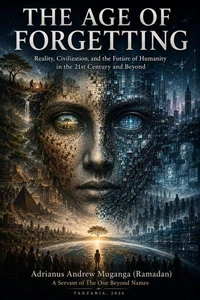
THE PATTERN OF REALITY: Dynamic Cyclical Movement Across Scales Governed by Relational Balance is a large-scale philosophical and civilizational work exploring the deeper structural patterns governing existence, consciousness, ecological systems, civilization, psychology, science, and the future of humanity. Written by Adrianus Andrew Muganga, the book proposes that reality operates not through isolated static entities, but through interconnected relational processes governed by movement, adaptation, emergence, balance, and structural consequence across scales of existence.
The work argues that many modern global crises, including ecological destabilization, psychological fragmentation, social polarization, technological imbalance, meaning collapse, compulsive consumption, and civilizational instability, are not isolated problems, but interconnected manifestations of deeper structural imbalance accumulating across systems simultaneously. Through systems thinking, process philosophy, ecological observation, psychology, cosmology, historical analysis, and interdisciplinary synthesis, the book examines how continuity emerges through adaptive relational balance while fragmentation and persistent imbalance generate instability, suffering, collapse, and systemic vulnerability.
Across twenty chapters, the framework explores themes such as reality as process rather than static form, the cyclical structure of existence, consciousness as relational process, suffering as fragmentation, ecological interdependence, civilizational collapse, technological acceleration without ethical maturity, systems stability, emergence, transformation, adaptive regulation, and the convergence of science, philosophy, and historical traditions beneath deeper structural reality.
The book also investigates humanity's historical movement from integrated observation toward fragmented perception. It argues that many modern divisions between science, philosophy, religion, psychology, economics, politics, and ecology emerged through conceptual separation rather than from reality itself. In response, the work attempts to restore structural coherence across domains of understanding by examining recurring relational dynamics operating across biological systems, ecosystems, civilizations, consciousness, social systems, and cosmological processes alike.
Rather than promoting ideology, dogma, or metaphysical absolutism, THE PATTERN OF REALITY is presented as an observational framework grounded in structural recognition and interdisciplinary inquiry. It does not ask readers for blind belief or symbolic allegiance. Instead, it encourages direct observation concerning the conditions sustaining continuity, coherence, stability, transformation, and long-term human survival within an increasingly unstable and interconnected world.
At its core, the book argues that reality continues through relationship, movement, adaptation, and balance, and that humanity's future may increasingly depend upon whether civilization develops the capacity to recognize and live within the structural conditions governing existence itself before fragmentation accelerates beyond recovery.
The work argues that many modern global crises, including ecological destabilization, psychological fragmentation, social polarization, technological imbalance, meaning collapse, compulsive consumption, and civilizational instability, are not isolated problems, but interconnected manifestations of deeper structural imbalance accumulating across systems simultaneously. Through systems thinking, process philosophy, ecological observation, psychology, cosmology, historical analysis, and interdisciplinary synthesis, the book examines how continuity emerges through adaptive relational balance while fragmentation and persistent imbalance generate instability, suffering, collapse, and systemic vulnerability.
Across twenty chapters, the framework explores themes such as reality as process rather than static form, the cyclical structure of existence, consciousness as relational process, suffering as fragmentation, ecological interdependence, civilizational collapse, technological acceleration without ethical maturity, systems stability, emergence, transformation, adaptive regulation, and the convergence of science, philosophy, and historical traditions beneath deeper structural reality.
The book also investigates humanity's historical movement from integrated observation toward fragmented perception. It argues that many modern divisions between science, philosophy, religion, psychology, economics, politics, and ecology emerged through conceptual separation rather than from reality itself. In response, the work attempts to restore structural coherence across domains of understanding by examining recurring relational dynamics operating across biological systems, ecosystems, civilizations, consciousness, social systems, and cosmological processes alike.
Rather than promoting ideology, dogma, or metaphysical absolutism, THE PATTERN OF REALITY is presented as an observational framework grounded in structural recognition and interdisciplinary inquiry. It does not ask readers for blind belief or symbolic allegiance. Instead, it encourages direct observation concerning the conditions sustaining continuity, coherence, stability, transformation, and long-term human survival within an increasingly unstable and interconnected world.
At its core, the book argues that reality continues through relationship, movement, adaptation, and balance, and that humanity's future may increasingly depend upon whether civilization develops the capacity to recognize and live within the structural conditions governing existence itself before fragmentation accelerates beyond recovery.
A propos de Adrianus Andrew Muganga (Ramad



0,99 €


0,99 €