SOLDES
Jusqu'à -70% sur une sélection d'articles*

Nouveauté
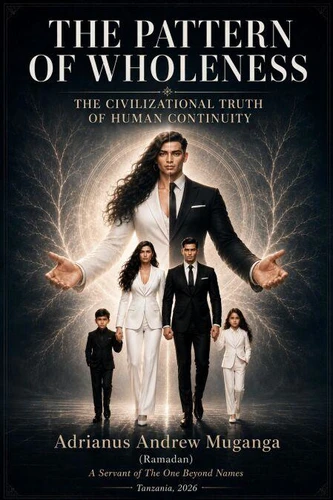
The Pattern Of Wholeness: The Civilizational Truth Of Human Continuity. 38, #38
Par :Formats :
Disponible dans votre compte client Decitre ou Furet du Nord dès validation de votre commande. Le format ePub est :
- Compatible avec une lecture sur My Vivlio (smartphone, tablette, ordinateur)
- Compatible avec une lecture sur liseuses Vivlio
- Pour les liseuses autres que Vivlio, vous devez utiliser le logiciel Adobe Digital Edition. Non compatible avec la lecture sur les liseuses Kindle, Remarkable et Sony
 , qui est-ce ?
Notre partenaire de plateforme de lecture numérique où vous retrouverez l'ensemble de vos ebooks gratuitement
Pour en savoir plus sur nos ebooks, consultez notre aide en ligne ici
C'est si simple ! Lisez votre ebook avec l'app Vivlio sur votre tablette, mobile ou ordinateur :

- FormatePub
- ISBN978-1-105-29357-3
- EAN9781105293573
- Date de parution18/05/2026
- Protection num.pas de protection
- Infos supplémentairesepub
- ÉditeurLulu.com
Résumé
THE PATTERN OF WHOLENESS: The Civilizational Truth of Human Continuity is a comprehensive civilizational inquiry into the structural realities that sustain human continuity, relational balance, family stability, and social cohesion across generations. In an age increasingly marked by fragmentation, relational instability, declining trust, and confusion concerning identity and human participation, this work asks a foundational question: what happens when civilization forgets the structural pattern through which differentiated human existence functions within one continuous whole? The book argues that many of the crises visible across modern societies cannot be understood as isolated political, economic, or technological problems alone.
Beneath these conditions lies a deeper structural forgetting concerning the nature of relationship, continuity, and differentiated participation itself. Through disciplined observation and evidence-grounded analysis, the work explores whether enduring civilizations are sustained not merely through institutional systems or technological advancement, but through alignment with foundational realities governing human continuity across generations.
Drawing from Hindu symbolism, Genesis, Taoist philosophy, ancient civilizations, biology, neuroscience, attachment theory, developmental psychology, natural systems, and historical analysis, Adrianus Andrew Muganga examines recurring patterns that connect masculine and feminine participation, relational coherence, intergenerational continuity, and social stability. The inquiry moves deliberately from symbolic memory and philosophical tradition to scientific confirmation and civilizational consequence, exploring how civilizations repeatedly preserved the recognition of differentiated wholeness through distinct symbolic languages and cultural frameworks.
Rather than treating religions or civilizations as competitors for ownership of truth, the book approaches them as independent witnesses preserving fragments of recurring structural reality. Topics explored throughout the work include biological complementarity, neurobiological differentiation, attachment and child development, educational conditioning, family continuity, social mistrust, transactional relationship models, and the long-term consequences of fragmentation across societies and generations.
The book further examines how historical distortions transformed difference into hierarchy, competition, and imbalance, weakening the relational foundations necessary for stable human development and enduring social cohesion. Written in a disciplined, statesmanlike voice, THE PATTERN OF WHOLENESS does not present itself as political ideology, sectarian doctrine, or reactionary argument. Instead, it proceeds through structural convergence, examining where recurring realities appear across tradition, nature, science, psychology, and human experience itself.
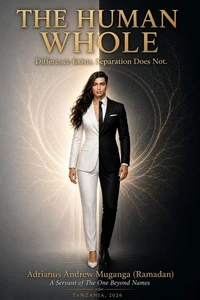
At the center of the work stands one foundational thesis: human continuity depends upon differentiated participation within one integrated whole. Difference is real, functional, and necessary, but separation is distortion. Civilization remains stable only when relational participation operates within coherent wholeness rather than fragmentation. Challenging modern assumptions concerning identity, relationship, education, and continuity, the book invites readers into a serious civilizational inquiry concerning the realities through which societies either endure or decline.
This work is offered not as doctrine to be accepted, but as reality to be recognized.
Beneath these conditions lies a deeper structural forgetting concerning the nature of relationship, continuity, and differentiated participation itself. Through disciplined observation and evidence-grounded analysis, the work explores whether enduring civilizations are sustained not merely through institutional systems or technological advancement, but through alignment with foundational realities governing human continuity across generations.
Drawing from Hindu symbolism, Genesis, Taoist philosophy, ancient civilizations, biology, neuroscience, attachment theory, developmental psychology, natural systems, and historical analysis, Adrianus Andrew Muganga examines recurring patterns that connect masculine and feminine participation, relational coherence, intergenerational continuity, and social stability. The inquiry moves deliberately from symbolic memory and philosophical tradition to scientific confirmation and civilizational consequence, exploring how civilizations repeatedly preserved the recognition of differentiated wholeness through distinct symbolic languages and cultural frameworks.
Rather than treating religions or civilizations as competitors for ownership of truth, the book approaches them as independent witnesses preserving fragments of recurring structural reality. Topics explored throughout the work include biological complementarity, neurobiological differentiation, attachment and child development, educational conditioning, family continuity, social mistrust, transactional relationship models, and the long-term consequences of fragmentation across societies and generations.
The book further examines how historical distortions transformed difference into hierarchy, competition, and imbalance, weakening the relational foundations necessary for stable human development and enduring social cohesion. Written in a disciplined, statesmanlike voice, THE PATTERN OF WHOLENESS does not present itself as political ideology, sectarian doctrine, or reactionary argument. Instead, it proceeds through structural convergence, examining where recurring realities appear across tradition, nature, science, psychology, and human experience itself.
At the center of the work stands one foundational thesis: human continuity depends upon differentiated participation within one integrated whole. Difference is real, functional, and necessary, but separation is distortion. Civilization remains stable only when relational participation operates within coherent wholeness rather than fragmentation. Challenging modern assumptions concerning identity, relationship, education, and continuity, the book invites readers into a serious civilizational inquiry concerning the realities through which societies either endure or decline.
This work is offered not as doctrine to be accepted, but as reality to be recognized.
A propos de Adrianus Andrew Muganga (Ramad

0,99 €

0,99 €