SOLDES
Jusqu'à -70% sur une sélection d'articles*

Nouveauté
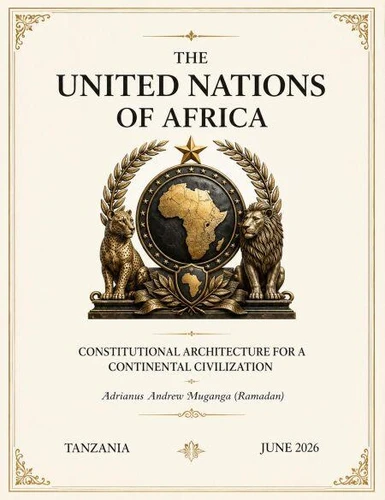
The United Nations of Africa: Constitutional Architecture for a Continental Civilization. 42, #42
Par :Formats :
Disponible dans votre compte client Decitre ou Furet du Nord dès validation de votre commande. Le format ePub est :
- Compatible avec une lecture sur My Vivlio (smartphone, tablette, ordinateur)
- Compatible avec une lecture sur liseuses Vivlio
- Pour les liseuses autres que Vivlio, vous devez utiliser le logiciel Adobe Digital Edition. Non compatible avec la lecture sur les liseuses Kindle, Remarkable et Sony
 , qui est-ce ?
Notre partenaire de plateforme de lecture numérique où vous retrouverez l'ensemble de vos ebooks gratuitement
Pour en savoir plus sur nos ebooks, consultez notre aide en ligne ici
C'est si simple ! Lisez votre ebook avec l'app Vivlio sur votre tablette, mobile ou ordinateur :

- FormatePub
- ISBN978-1-105-18691-2
- EAN9781105186912
- Date de parution21/06/2026
- Protection num.pas de protection
- Infos supplémentairesepub
- ÉditeurLulu.com
Résumé
The United Nations of Africa: Constitutional Architecture for a Continental Civilization is a comprehensive constitutional blueprint exploring how a future continental union of African nations could be organized through democratic governance, constitutional law, accountable institutions, and long-term strategic planning. Developed as an independent scholarly project, the work presents a detailed framework for promoting peace, prosperity, human development, scientific advancement, environmental stewardship, and continental cooperation while preserving national sovereignty, cultural diversity, and democratic self-government.
The Constitution establishes an extensive institutional architecture covering governance, citizenship, legislative authority, executive administration, judicial independence, public accountability, economic development, education, science, technology, infrastructure, public health, environmental stewardship, continental security, and constitutional continuity. It seeks to demonstrate how large and diverse societies may cooperate within a shared constitutional framework while maintaining local autonomy, constitutional safeguards, and democratic participation.
A central theme of the work is the belief that strong institutions, responsible leadership, and constitutional accountability are essential foundations for long-term stability and development. The framework emphasizes the rule of law, professional administration, intergenerational responsibility, peaceful dispute resolution, sustainable resource management, and future-oriented governance capable of adapting to technological and social change.
Rather than serving as a political manifesto or official governmental proposal, this publication is presented as a detailed exercise in constitutional design and institutional architecture. It is intended to encourage research, discussion, and critical examination of African integration, governance innovation, and the future of constitutional government on the continent. Written for scholars, policymakers, legal practitioners, students, researchers, and readers interested in governance and development, this work offers a unique contribution to contemporary discussions concerning statecraft, constitutional theory, public administration, and the long-term advancement of African civilization.
It presents a vision of a peaceful, prosperous, and cooperative future founded upon law, accountability, democratic governance, and the shared aspirations of the peoples of Africa.
The Constitution establishes an extensive institutional architecture covering governance, citizenship, legislative authority, executive administration, judicial independence, public accountability, economic development, education, science, technology, infrastructure, public health, environmental stewardship, continental security, and constitutional continuity. It seeks to demonstrate how large and diverse societies may cooperate within a shared constitutional framework while maintaining local autonomy, constitutional safeguards, and democratic participation.
A central theme of the work is the belief that strong institutions, responsible leadership, and constitutional accountability are essential foundations for long-term stability and development. The framework emphasizes the rule of law, professional administration, intergenerational responsibility, peaceful dispute resolution, sustainable resource management, and future-oriented governance capable of adapting to technological and social change.
Rather than serving as a political manifesto or official governmental proposal, this publication is presented as a detailed exercise in constitutional design and institutional architecture. It is intended to encourage research, discussion, and critical examination of African integration, governance innovation, and the future of constitutional government on the continent. Written for scholars, policymakers, legal practitioners, students, researchers, and readers interested in governance and development, this work offers a unique contribution to contemporary discussions concerning statecraft, constitutional theory, public administration, and the long-term advancement of African civilization.
It presents a vision of a peaceful, prosperous, and cooperative future founded upon law, accountability, democratic governance, and the shared aspirations of the peoples of Africa.
A propos de Adrianus Andrew Muganga (Ramad











0,99 €




0,99 €