SOLDES
Jusqu'à -70% sur une sélection d'articles*

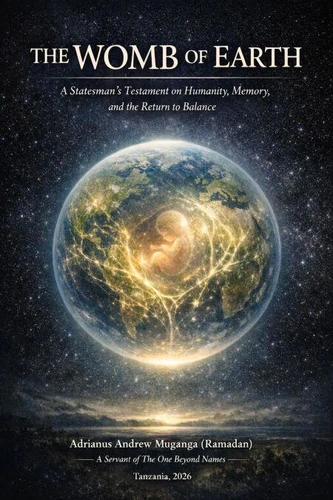
The Womb of Earth: A Statesman’s Testament on Humanity, Memory, and the Return to Balance. 31, #31
Par :Formats :
Disponible dans votre compte client Decitre ou Furet du Nord dès validation de votre commande. Le format ePub est :
- Compatible avec une lecture sur My Vivlio (smartphone, tablette, ordinateur)
- Compatible avec une lecture sur liseuses Vivlio
- Pour les liseuses autres que Vivlio, vous devez utiliser le logiciel Adobe Digital Edition. Non compatible avec la lecture sur les liseuses Kindle, Remarkable et Sony
 , qui est-ce ?
Notre partenaire de plateforme de lecture numérique où vous retrouverez l'ensemble de vos ebooks gratuitement
Pour en savoir plus sur nos ebooks, consultez notre aide en ligne ici
C'est si simple ! Lisez votre ebook avec l'app Vivlio sur votre tablette, mobile ou ordinateur :

- FormatePub
- ISBN978-1-105-39684-7
- EAN9781105396847
- Date de parution18/04/2026
- Protection num.pas de protection
- Infos supplémentairesepub
- ÉditeurLulu.com
Résumé
The Womb of Earth: A Statesman's Testament on Humanity, Memory, and the Return to Balance is a philosophical exploration of humanity as a single, interconnected system living in a state of fragmentation. At its core, the book asks a fundamental question: if humanity is one, why does it function as though it is divided?Through a structured and reflective approach, the work examines the patterns, systems, and inherited assumptions that shape human behavior across social, political, and cultural contexts.
It introduces the concept of collective memory, suggesting that the erosion of this shared continuity has contributed to imbalance, disconnection, and conflict. Rather than offering fixed solutions or ideological conclusions, the text invites readers into a process of recognition. It encourages a deeper observation of the structures that sustain division and the subtle ways in which unity is obscured.
By focusing on awareness rather than prescription, the book creates space for thoughtful engagement and reflection. Positioned between philosophy, social analysis, and ethical inquiry, this work speaks to individuals, thinkers, and leaders seeking a broader understanding of humanity's condition. It proposes that restoration lies not in constructing entirely new systems, but in realigning with an underlying coherence that remains present beneath fragmentation.
This is not a call to adopt a belief, but an invitation to see more clearly.
It introduces the concept of collective memory, suggesting that the erosion of this shared continuity has contributed to imbalance, disconnection, and conflict. Rather than offering fixed solutions or ideological conclusions, the text invites readers into a process of recognition. It encourages a deeper observation of the structures that sustain division and the subtle ways in which unity is obscured.
By focusing on awareness rather than prescription, the book creates space for thoughtful engagement and reflection. Positioned between philosophy, social analysis, and ethical inquiry, this work speaks to individuals, thinkers, and leaders seeking a broader understanding of humanity's condition. It proposes that restoration lies not in constructing entirely new systems, but in realigning with an underlying coherence that remains present beneath fragmentation.
This is not a call to adopt a belief, but an invitation to see more clearly.
A propos de Adrianus Andrew Muganga (Ramad
0,99 €
0,99 €