SOLDES
Jusqu'à -70% sur une sélection d'articles*

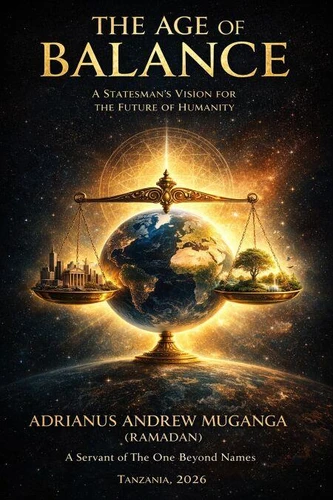
The Age of Balance: A Statesman’s Vision for the Future of Humanity. 26, #26
Par :Formats :
Disponible dans votre compte client Decitre ou Furet du Nord dès validation de votre commande. Le format ePub est :
- Compatible avec une lecture sur My Vivlio (smartphone, tablette, ordinateur)
- Compatible avec une lecture sur liseuses Vivlio
- Pour les liseuses autres que Vivlio, vous devez utiliser le logiciel Adobe Digital Edition. Non compatible avec la lecture sur les liseuses Kindle, Remarkable et Sony
 , qui est-ce ?
Notre partenaire de plateforme de lecture numérique où vous retrouverez l'ensemble de vos ebooks gratuitement
Pour en savoir plus sur nos ebooks, consultez notre aide en ligne ici
C'est si simple ! Lisez votre ebook avec l'app Vivlio sur votre tablette, mobile ou ordinateur :

- FormatePub
- ISBN978-1-105-50253-8
- EAN9781105502538
- Date de parution15/03/2026
- Protection num.pas de protection
- Infos supplémentairesepub
- ÉditeurLulu.com
Résumé
The Age of Balance: A Statesman's Vision for the Future of Humanity explores the long evolution of political systems and the transformation of global order. The book examines how human societies have organized leadership, authority, and governance from early communities and empires to modern nation states and international institutions. Throughout history, political systems have developed through cycles of emergence, growth, stability, crisis, and renewal.
Each stage reflects humanity's effort to create order, maintain legitimacy, and manage power within changing social and economic conditions. Empires established centralized authority across vast territories, while the rise of the nation state introduced sovereignty, citizenship, and modern political institutions. In the modern era, international organizations and diplomatic frameworks emerged to encourage cooperation and reduce conflict among states.
The contemporary world is now experiencing profound transformation. Technological change, economic interdependence, environmental challenges, and increasing interaction among civilizations have created a global environment where traditional models of dominance are becoming less sustainable. Many of the challenges facing humanity today require cooperation across borders and institutions capable of balancing national interests with shared global responsibilities.
In response to these developments, the book introduces the concept of the Age of Balance. This concept describes a new stage in political evolution in which stability depends on equilibrium rather than domination. Balance between power and responsibility. Balance between sovereignty and cooperation. Balance between national interests and the collective well being of humanity. The work emphasizes the importance of ethical leadership, institutional legitimacy, and dialogue among civilizations in guiding societies through periods of transformation.
It argues that future global stability will depend on the ability of nations and institutions to maintain equilibrium within an interconnected world while preserving cultural diversity and political independence. Combining historical reflection, political philosophy, and analysis of international relations, The Age of Balance invites readers to reflect on the future of global governance and the role of cooperation in shaping a more stable and balanced world order.
Each stage reflects humanity's effort to create order, maintain legitimacy, and manage power within changing social and economic conditions. Empires established centralized authority across vast territories, while the rise of the nation state introduced sovereignty, citizenship, and modern political institutions. In the modern era, international organizations and diplomatic frameworks emerged to encourage cooperation and reduce conflict among states.
The contemporary world is now experiencing profound transformation. Technological change, economic interdependence, environmental challenges, and increasing interaction among civilizations have created a global environment where traditional models of dominance are becoming less sustainable. Many of the challenges facing humanity today require cooperation across borders and institutions capable of balancing national interests with shared global responsibilities.
In response to these developments, the book introduces the concept of the Age of Balance. This concept describes a new stage in political evolution in which stability depends on equilibrium rather than domination. Balance between power and responsibility. Balance between sovereignty and cooperation. Balance between national interests and the collective well being of humanity. The work emphasizes the importance of ethical leadership, institutional legitimacy, and dialogue among civilizations in guiding societies through periods of transformation.
It argues that future global stability will depend on the ability of nations and institutions to maintain equilibrium within an interconnected world while preserving cultural diversity and political independence. Combining historical reflection, political philosophy, and analysis of international relations, The Age of Balance invites readers to reflect on the future of global governance and the role of cooperation in shaping a more stable and balanced world order.
A propos de Adrianus Andrew Muganga (Ramad

0,99 €

0,99 €