SOLDES
Jusqu'à -70% sur une sélection d'articles*

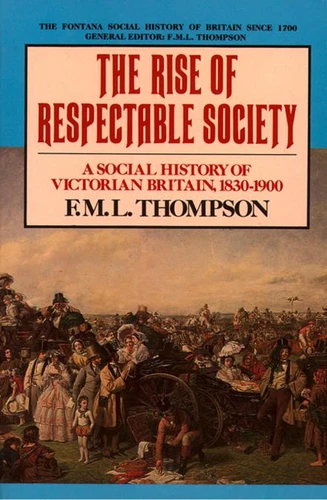
The Rise of Respectable Society. A Social History of Victorian Britain
Par :Formats :
Disponible dans votre compte client Decitre ou Furet du Nord dès validation de votre commande. Le format ePub protégé est :
- Compatible avec une lecture sur My Vivlio (smartphone, tablette, ordinateur)
- Compatible avec une lecture sur liseuses Vivlio
- Pour les liseuses autres que Vivlio, vous devez utiliser le logiciel Adobe Digital Edition. Non compatible avec la lecture sur les liseuses Kindle, Remarkable et Sony
- Non compatible avec un achat hors France métropolitaine
 , qui est-ce ?
Notre partenaire de plateforme de lecture numérique où vous retrouverez l'ensemble de vos ebooks gratuitement
Pour en savoir plus sur nos ebooks, consultez notre aide en ligne ici
C'est si simple ! Lisez votre ebook avec l'app Vivlio sur votre tablette, mobile ou ordinateur :

- Nombre de pages384
- FormatePub
- ISBN978-0-00-739278-0
- EAN9780007392780
- Date de parution31/03/2016
- Protection num.Adobe DRM
- Infos supplémentairesepub
- ÉditeurFontana Press
Résumé
For the quality of its research and the clarity of its synthesis, The Rise of Respectable Society will gain a reputation as an outstanding reinterpretation of the Victorian period.
In the years since the appearance of G. M. Young's brilliant survey, Victorian England: Portrait of an Age, a mass of new research from new perspectives has entirely changed the landscape of the Victorian era. The Rise of Respectable Society offers a new map of this territory as revealed by close empirical studies of marriage, the family, domestic and working classes from the rigidity of the class stereotypes by which they have been frequently portrayed.
But it also argues that the diversity of cultures within those classes was in fact the essence of Victorian society, and that as each class developed its notions of self-respect, so it adhered ever more closely to the classes above and below it, thus avoiding the revolutionary fractures which appeared in many other European countries during this period.
But it also argues that the diversity of cultures within those classes was in fact the essence of Victorian society, and that as each class developed its notions of self-respect, so it adhered ever more closely to the classes above and below it, thus avoiding the revolutionary fractures which appeared in many other European countries during this period.