SOLDES
Jusqu'à -70% sur une sélection d'articles*

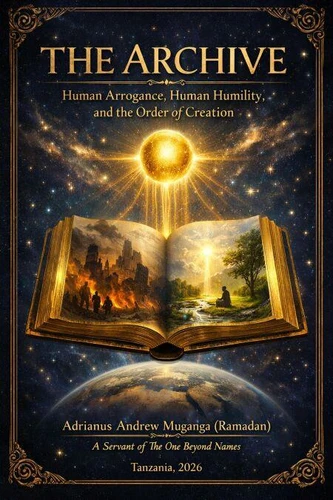
The Archive: Human Arrogance, Human Humility, and the Order of Creation. 17, #17
Par :Formats :
Disponible dans votre compte client Decitre ou Furet du Nord dès validation de votre commande. Le format ePub est :
- Compatible avec une lecture sur My Vivlio (smartphone, tablette, ordinateur)
- Compatible avec une lecture sur liseuses Vivlio
- Pour les liseuses autres que Vivlio, vous devez utiliser le logiciel Adobe Digital Edition. Non compatible avec la lecture sur les liseuses Kindle, Remarkable et Sony
 , qui est-ce ?
Notre partenaire de plateforme de lecture numérique où vous retrouverez l'ensemble de vos ebooks gratuitement
Pour en savoir plus sur nos ebooks, consultez notre aide en ligne ici
C'est si simple ! Lisez votre ebook avec l'app Vivlio sur votre tablette, mobile ou ordinateur :

- FormatePub
- ISBN978-1-105-80683-4
- EAN9781105806834
- Date de parution12/01/2026
- Protection num.pas de protection
- Infos supplémentairesepub
- ÉditeurLulu.com
Résumé
THE ARCHIVE: Human Arrogance, Human Humility, and the Order of Creation is a sweeping work of moral history, ethical reflection, and civilizational analysis that examines one timeless law governing human existence: power detached from humility collapses, while power aligned with moral order endures. Spanning from the first moral awakening of humanity to the complex crises of the twenty-first century and beyond, this book assembles 215 interconnected narratives drawn from sacred history, global civilizations, philosophy, leadership, and contemporary world events.
From Adam and the first exercise of moral choice, through prophets, emperors, philosophers, and reformers, to modern governments, corporations, technologies, and environmental systems, THE ARCHIVE reveals a single recurring pattern: arrogance inflates briefly, then destroys; humility restrains, preserves, and renews. This is not a religious doctrine bound to one tradition, nor a political manifesto tied to any ideology.
It is a comparative, cross-civilizational mirror that draws from multiple spiritual traditions, indigenous wisdom, philosophical thought, and historical evidence to illuminate the ethical structure underlying human history. Every chapter demonstrates how societies rise when leadership is rooted in responsibility, service, and restraint, and how they fall when ego, domination, and forgetfulness of limits become normalized.
THE ARCHIVE confronts ancient empires and modern superpowers with equal clarity. Financial collapses, wars, climate crises, technological overreach, and social fragmentation are presented not as random failures, but as predictable consequences of the same moral imbalance seen throughout history. At the same time, the book highlights moments when humility, cooperation, and ethical courage prevented disaster, proving that collapse is not inevitable when responsibility is embraced.
Each story is followed by reflection, inviting the reader to move beyond observation into self-examination. Leaders are challenged to reconsider how authority is exercised. Institutions are measured not by scale or influence, but by alignment with moral order. Individuals are reminded that conscience, not power, is the true foundation of justice. THE ARCHIVE is written for readers seeking depth rather than comfort.
It is designed for leaders, thinkers, students, educators, and citizens who wish to understand why civilizations repeat the same mistakes despite increasing knowledge, and how ethical awareness can interrupt this cycle. It argues that humanity's greatest crisis is not technological or political, but moral: knowledge has advanced faster than responsibility. Ultimately, this book is an act of remembrance.
It preserves the lessons paid for by generations of human experience and places them before the present age as a warning and a guide. THE ARCHIVE does not predict the future; it shows the conditions under which futures survive or collapse. It asks one enduring question of every generation: will power serve ego, or will it submit to the order that sustains life?This is not a book to be consumed once, but a record to be returned to.
It stands as a mirror, a warning, and a call to awakening, for a humanity holding unprecedented power, and unprecedented responsibility.
From Adam and the first exercise of moral choice, through prophets, emperors, philosophers, and reformers, to modern governments, corporations, technologies, and environmental systems, THE ARCHIVE reveals a single recurring pattern: arrogance inflates briefly, then destroys; humility restrains, preserves, and renews. This is not a religious doctrine bound to one tradition, nor a political manifesto tied to any ideology.
It is a comparative, cross-civilizational mirror that draws from multiple spiritual traditions, indigenous wisdom, philosophical thought, and historical evidence to illuminate the ethical structure underlying human history. Every chapter demonstrates how societies rise when leadership is rooted in responsibility, service, and restraint, and how they fall when ego, domination, and forgetfulness of limits become normalized.
THE ARCHIVE confronts ancient empires and modern superpowers with equal clarity. Financial collapses, wars, climate crises, technological overreach, and social fragmentation are presented not as random failures, but as predictable consequences of the same moral imbalance seen throughout history. At the same time, the book highlights moments when humility, cooperation, and ethical courage prevented disaster, proving that collapse is not inevitable when responsibility is embraced.
Each story is followed by reflection, inviting the reader to move beyond observation into self-examination. Leaders are challenged to reconsider how authority is exercised. Institutions are measured not by scale or influence, but by alignment with moral order. Individuals are reminded that conscience, not power, is the true foundation of justice. THE ARCHIVE is written for readers seeking depth rather than comfort.
It is designed for leaders, thinkers, students, educators, and citizens who wish to understand why civilizations repeat the same mistakes despite increasing knowledge, and how ethical awareness can interrupt this cycle. It argues that humanity's greatest crisis is not technological or political, but moral: knowledge has advanced faster than responsibility. Ultimately, this book is an act of remembrance.
It preserves the lessons paid for by generations of human experience and places them before the present age as a warning and a guide. THE ARCHIVE does not predict the future; it shows the conditions under which futures survive or collapse. It asks one enduring question of every generation: will power serve ego, or will it submit to the order that sustains life?This is not a book to be consumed once, but a record to be returned to.
It stands as a mirror, a warning, and a call to awakening, for a humanity holding unprecedented power, and unprecedented responsibility.
A propos de Adrianus Andrew Muganga (Ramad

0,99 €

0,99 €