Clare Carlisle is Professor of Philosophy at King's College London. She is the author of seven books, including Spinoza's Religion, Philosopher of the Heart: The Restless Life of Søren Kierkegaard, and On Habit. She has also edited George Eliot's translation of Spinoza's Ethics. She grew up in Manchester, studied philosophy and theology at Cambridge, and now lives in Hackney.
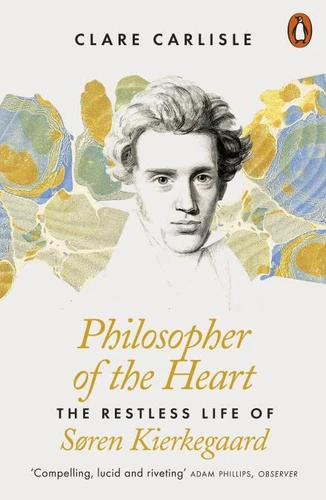
Philosopher of the Heart. The Restless Life of Søren Kierkegaard
Par :Formats :
Disponible dans votre compte client Decitre ou Furet du Nord dès validation de votre commande. Le format ePub protégé est :
- Compatible avec une lecture sur My Vivlio (smartphone, tablette, ordinateur)
- Compatible avec une lecture sur liseuses Vivlio
- Pour les liseuses autres que Vivlio, vous devez utiliser le logiciel Adobe Digital Edition. Non compatible avec la lecture sur les liseuses Kindle, Remarkable et Sony
- Non compatible avec un achat hors France métropolitaine
 , qui est-ce ?
Notre partenaire de plateforme de lecture numérique où vous retrouverez l'ensemble de vos ebooks gratuitement
Pour en savoir plus sur nos ebooks, consultez notre aide en ligne ici
C'est si simple ! Lisez votre ebook avec l'app Vivlio sur votre tablette, mobile ou ordinateur :

- Nombre de pages368
- FormatePub
- ISBN978-0-241-28359-2
- EAN9780241283592
- Date de parution04/04/2019
- Protection num.Adobe DRM
- Infos supplémentairesepub
- ÉditeurPENGUIN
Résumé
Selected as a Book of the Year in The Times Literary Supplement'This lucid and riveting new biography at once rescuses Kierkegaard from the scholars and shows why he is such an intriguing and useful figure' ObserverSøren Kierkegaard, one of the most passionate and challenging of modern philosophers, is now celebrated as the father of existentialism - yet his contemporaries described him as a philosopher of the heart.
Over about a decade in the 1840s and 1850s, writings poured from his pen analysing love and suffering, courage and anxiety, religious longing and defiance, and forging a new philosophical style rooted in the inward drama of being human. As Christianity seemed to sleepwalk through a changing world, Kierkegaard dazzlingly revealed its spiritual power while exposing the poverty of official religion. His restless creativity was spurred on by his own failures: his relationship with the young woman whom he promised to marry, then left to devote himself to writing, haunted him throughout his life.
Though tormented by the pressures of celebrity, he deliberately lived amidst the crowds in Copenhagen, known by everyone but, he felt, understood by no one. When he collapsed exhausted at the age of 42, he was still pursuing the question of existence: how to be a human being in this world?Clare Carlisle's innovative and moving biography writes Kierkegaard's remarkable life as far as possible from his own perspective, conveying what it was like to be this Socrates of Christendom - as he put it, living life forwards yet only understanding it backwards.
Over about a decade in the 1840s and 1850s, writings poured from his pen analysing love and suffering, courage and anxiety, religious longing and defiance, and forging a new philosophical style rooted in the inward drama of being human. As Christianity seemed to sleepwalk through a changing world, Kierkegaard dazzlingly revealed its spiritual power while exposing the poverty of official religion. His restless creativity was spurred on by his own failures: his relationship with the young woman whom he promised to marry, then left to devote himself to writing, haunted him throughout his life.
Though tormented by the pressures of celebrity, he deliberately lived amidst the crowds in Copenhagen, known by everyone but, he felt, understood by no one. When he collapsed exhausted at the age of 42, he was still pursuing the question of existence: how to be a human being in this world?Clare Carlisle's innovative and moving biography writes Kierkegaard's remarkable life as far as possible from his own perspective, conveying what it was like to be this Socrates of Christendom - as he put it, living life forwards yet only understanding it backwards.