SOLDES
Jusqu'à -70% sur une sélection d'articles*

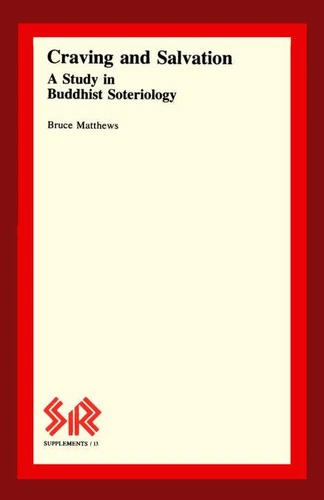
Craving and Salvation. A Study in Buddhist Soteriology
Par :Formats :
Disponible dans votre compte client Decitre ou Furet du Nord dès validation de votre commande. Le format ePub est :
- Compatible avec une lecture sur My Vivlio (smartphone, tablette, ordinateur)
- Compatible avec une lecture sur liseuses Vivlio
- Pour les liseuses autres que Vivlio, vous devez utiliser le logiciel Adobe Digital Edition. Non compatible avec la lecture sur les liseuses Kindle, Remarkable et Sony
 , qui est-ce ?
Notre partenaire de plateforme de lecture numérique où vous retrouverez l'ensemble de vos ebooks gratuitement
Pour en savoir plus sur nos ebooks, consultez notre aide en ligne ici
C'est si simple ! Lisez votre ebook avec l'app Vivlio sur votre tablette, mobile ou ordinateur :

- Nombre de pages150
- FormatePub
- ISBN1-55458-742-5
- EAN9781554587421
- Date de parution01/01/2006
- Protection num.Digital Watermarking
- Taille2 Mo
- Infos supplémentairesepub
- ÉditeurWilfrid Laurier University Press
Résumé
Is there any escape form the awareness of pain and the bonds of an unending cycle of life? Why are human subject to craving" What is the nature human beings? The Buddhist understanding of salvation is based upon such queries.
A thorough grasp of the function of craving in religious life is strategic to an understanding of Buddhism, yet its role in the Buddhist plan of salvation is easy to oversimplify and misinterpret.
Matthews examines the concept of craving in Buddhism from both a phenomenological and religious perspective. He btings to the task a critical examination of key canonical texts of the Sutta Pitaka (Nikayas) as well as extensive travel in research of the meaning of craving for contemporary Buddhists, from learned monks to lay villagers. Having established the Buddhist perspective on how craving arises, how it affects the mind, and how it can be redirected, the volume concludes with spiritual implications of craving: crucial to awareness and freedom-emancipation-is the engagement and harnessing rather than suppression of craving.
The volume will be of interest to students of Buddhism, historians of religion, and persons interested in basic human questions.
Matthews examines the concept of craving in Buddhism from both a phenomenological and religious perspective. He btings to the task a critical examination of key canonical texts of the Sutta Pitaka (Nikayas) as well as extensive travel in research of the meaning of craving for contemporary Buddhists, from learned monks to lay villagers. Having established the Buddhist perspective on how craving arises, how it affects the mind, and how it can be redirected, the volume concludes with spiritual implications of craving: crucial to awareness and freedom-emancipation-is the engagement and harnessing rather than suppression of craving.
The volume will be of interest to students of Buddhism, historians of religion, and persons interested in basic human questions.