A writer of structured nonfiction that turns history, strategy, and self-improvement into useful ideas for modern readers.
Nouveauté
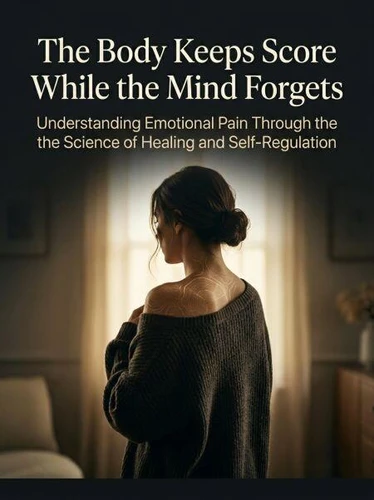
The Body Keeps Score While the Mind Forgets. Understanding Emotional Pain Through the Science of Healing and Self-Regulation
Par :Formats :
Disponible dans votre compte client Decitre ou Furet du Nord dès validation de votre commande. Le format ePub est :
- Compatible avec une lecture sur My Vivlio (smartphone, tablette, ordinateur)
- Compatible avec une lecture sur liseuses Vivlio
- Pour les liseuses autres que Vivlio, vous devez utiliser le logiciel Adobe Digital Edition. Non compatible avec la lecture sur les liseuses Kindle, Remarkable et Sony
 , qui est-ce ?
Notre partenaire de plateforme de lecture numérique où vous retrouverez l'ensemble de vos ebooks gratuitement
Pour en savoir plus sur nos ebooks, consultez notre aide en ligne ici
C'est si simple ! Lisez votre ebook avec l'app Vivlio sur votre tablette, mobile ou ordinateur :

- Nombre de pages168
- FormatePub
- ISBN978-3-565-63815-4
- EAN9783565638154
- Date de parution12/08/2026
- Protection num.pas de protection
- Taille754 Ko
- Infos supplémentairesepub
- ÉditeurEmphaloz Publishing House
Résumé
You know something is wrong, but you cannot explain why certain situations make your chest tighten or your thoughts spiral. This book explores the hidden mechanisms behind emotional suffering and the pathways the body uses to process unresolved pain. Drawing on clinical research and neuroscience, it examines how trauma, stress, and relational wounds leave traces in the nervous system long after the original event has passed.
You will learn to recognize the signs your body sends when it feels unsafe, understand why certain coping strategies stop working, and discover how emotional regulation develops through small, repeated acts of self-awareness. The book does not promise quick fixes or permanent transformation. Instead, it offers a grounded framework for understanding why healing often feels nonlinear, why some wounds take longer to close, and how the nervous system gradually learns to trust safety again.
What would change if you could see your emotional patterns as signals rather than failures?
You will learn to recognize the signs your body sends when it feels unsafe, understand why certain coping strategies stop working, and discover how emotional regulation develops through small, repeated acts of self-awareness. The book does not promise quick fixes or permanent transformation. Instead, it offers a grounded framework for understanding why healing often feels nonlinear, why some wounds take longer to close, and how the nervous system gradually learns to trust safety again.
What would change if you could see your emotional patterns as signals rather than failures?