A writer of structured nonfiction that turns history, strategy, and self-improvement into useful ideas for modern readers.
Nouveauté
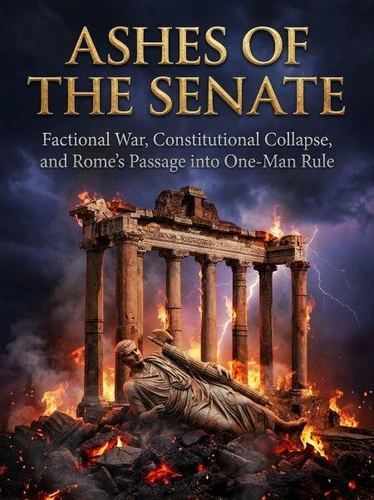
Ashes of the Senate. Factional War, Constitutional Collapse, and Rome's Passage into One-Man Rule
Par :Formats :
Disponible dans votre compte client Decitre ou Furet du Nord dès validation de votre commande. Le format ePub est :
- Compatible avec une lecture sur My Vivlio (smartphone, tablette, ordinateur)
- Compatible avec une lecture sur liseuses Vivlio
- Pour les liseuses autres que Vivlio, vous devez utiliser le logiciel Adobe Digital Edition. Non compatible avec la lecture sur les liseuses Kindle, Remarkable et Sony
 , qui est-ce ?
Notre partenaire de plateforme de lecture numérique où vous retrouverez l'ensemble de vos ebooks gratuitement
Pour en savoir plus sur nos ebooks, consultez notre aide en ligne ici
C'est si simple ! Lisez votre ebook avec l'app Vivlio sur votre tablette, mobile ou ordinateur :

- Nombre de pages574
- FormatePub
- ISBN978-3-565-63438-5
- EAN9783565634385
- Date de parution11/08/2026
- Protection num.pas de protection
- Taille1 Mo
- Infos supplémentairesepub
- ÉditeurEmphaloz Publishing House
Résumé
Rome did not lose its republic to a tyrant. It surrendered it gradually, through the logic of its own ambitions - through senators who chose faction over institution, through generals who discovered that legions were more responsive than assemblies, through a political culture that mistook dominance for governance. By the time Julius Caesar crossed the Rubicon in January 49 BCE, the republic's constitutional framework had already been hollowed from within, its checks and balances corroded not by a single act of will but by decades of accumulated structural failure.
The Senate's authority rested on a system of magistracies, vetoes, and annual terms designed to prevent the permanent concentration of power.
What it could not prevent was wealth. The Optimates - Rome's conservative oligarchy - did not simply defend tradition. They defended a land distribution system that had transferred public agrarian holdings into private accumulation on a scale the republic's founding laws never anticipated. Against them stood the Populares, who discovered that popular assemblies, land reform, and the rhetoric of the dispossessed could be wielded as instruments of factional ambition as readily as institutional reform.
The Gracchi had tried to recalibrate the system.
What it could not prevent was wealth. The Optimates - Rome's conservative oligarchy - did not simply defend tradition. They defended a land distribution system that had transferred public agrarian holdings into private accumulation on a scale the republic's founding laws never anticipated. Against them stood the Populares, who discovered that popular assemblies, land reform, and the rhetoric of the dispossessed could be wielded as instruments of factional ambition as readily as institutional reform.
The Gracchi had tried to recalibrate the system.