A writer of structured nonfiction that turns history, strategy, and self-improvement into useful ideas for modern readers.
Nouveauté
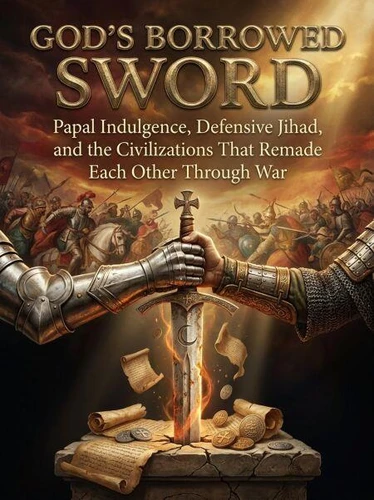
God's Borrowed Sword. Papal Indulgence, Defensive Jihad, and the Civilizations That Remade Each Other Through War
Par :Formats :
Disponible dans votre compte client Decitre ou Furet du Nord dès validation de votre commande. Le format ePub est :
- Compatible avec une lecture sur My Vivlio (smartphone, tablette, ordinateur)
- Compatible avec une lecture sur liseuses Vivlio
- Pour les liseuses autres que Vivlio, vous devez utiliser le logiciel Adobe Digital Edition. Non compatible avec la lecture sur les liseuses Kindle, Remarkable et Sony
 , qui est-ce ?
Notre partenaire de plateforme de lecture numérique où vous retrouverez l'ensemble de vos ebooks gratuitement
Pour en savoir plus sur nos ebooks, consultez notre aide en ligne ici
C'est si simple ! Lisez votre ebook avec l'app Vivlio sur votre tablette, mobile ou ordinateur :

- Nombre de pages487
- FormatePub
- ISBN978-3-565-63473-6
- EAN9783565634736
- Date de parution11/08/2026
- Protection num.pas de protection
- Taille1 Mo
- Infos supplémentairesepub
- ÉditeurEmphaloz Publishing House
Résumé
Jerusalem did not simply fall in 1099. It was transformed - into a symbol so charged with spiritual debt that two civilizations organized their violence around it for nearly two centuries. The Crusades were not wars launched by barbarians against believers, nor were they a clash of incompatible worlds. They were the product of two sophisticated ideological systems - Latin Christendom and the Islamic Near East - each of which had developed a theology of violence so internally coherent that neither required the other's consent to believe itself righteous.
The papal doctrine of indulgence did not invent the idea of sacred war.
It systematized it. When Urban II preached at Clermont in 1095, he offered something no battlefield commander had previously been able to promise: the remission of temporal punishment for sin. This was not manipulation. It was a calculated translation of Augustinian theology into military recruitment - and it worked because it answered a genuine spiritual anxiety in a society that understood violence as both necessity and transgression.
The crusader was not absolved of violence; he was given a framework in which violence could become devotion. That distinction carried enormous consequences for how Latin Christianity would understand itself for centuries to come. Across the frontier, the Islamic world did not initially respond with jihad. It responded with political fragmentation, local negotiation, and often collaboration.
It systematized it. When Urban II preached at Clermont in 1095, he offered something no battlefield commander had previously been able to promise: the remission of temporal punishment for sin. This was not manipulation. It was a calculated translation of Augustinian theology into military recruitment - and it worked because it answered a genuine spiritual anxiety in a society that understood violence as both necessity and transgression.
The crusader was not absolved of violence; he was given a framework in which violence could become devotion. That distinction carried enormous consequences for how Latin Christianity would understand itself for centuries to come. Across the frontier, the Islamic world did not initially respond with jihad. It responded with political fragmentation, local negotiation, and often collaboration.