A writer of structured nonfiction that turns history, strategy, and self-improvement into useful ideas for modern readers.
Nouveauté
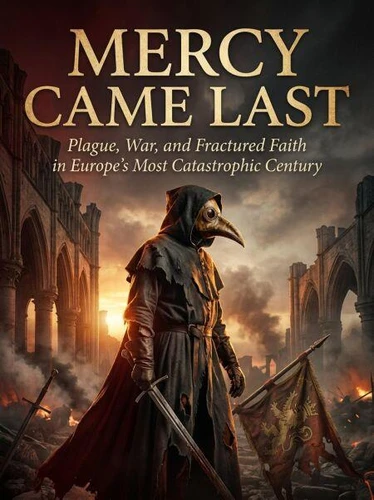
Mercy Came Last. Plague, War, and Fractured Faith in Europe's Most Catastrophic Century
Par :Formats :
Disponible dans votre compte client Decitre ou Furet du Nord dès validation de votre commande. Le format ePub est :
- Compatible avec une lecture sur My Vivlio (smartphone, tablette, ordinateur)
- Compatible avec une lecture sur liseuses Vivlio
- Pour les liseuses autres que Vivlio, vous devez utiliser le logiciel Adobe Digital Edition. Non compatible avec la lecture sur les liseuses Kindle, Remarkable et Sony
 , qui est-ce ?
Notre partenaire de plateforme de lecture numérique où vous retrouverez l'ensemble de vos ebooks gratuitement
Pour en savoir plus sur nos ebooks, consultez notre aide en ligne ici
C'est si simple ! Lisez votre ebook avec l'app Vivlio sur votre tablette, mobile ou ordinateur :

- Nombre de pages552
- FormatePub
- ISBN978-3-565-63484-2
- EAN9783565634842
- Date de parution11/08/2026
- Protection num.pas de protection
- Taille1 Mo
- Infos supplémentairesepub
- ÉditeurEmphaloz Publishing House
Résumé
There are centuries that do not merely pass - they break. The fourteenth century did not arrive as a gradual decline. It arrived as accumulated catastrophe, so dense and so rapid that contemporaries lacked the vocabulary to explain why their world was dissolving faster than they could mourn it. Mercy Came Last is not a chronicle of disaster. It is an anatomy of how systems collapse when multiple crises strike not in sequence, but simultaneously.
When the Black Death reached Europe's ports in 1347, it did not kill randomly.
It killed structurally. The agrarian economy of the high medieval period rested on a labor surplus - cheap, replaceable, invisible. The plague erased that surplus within two years, killing between one-third and one-half of Europe's population and inverting the economic logic that had sustained feudal hierarchy for centuries. Serfs who survived discovered, for the first time, that their labor had value.
Lords who survived discovered, for the first time, that they could not compel enough of it. The demographic catastrophe did not merely reduce Europe's population. It rewrote the terms of its social contract. Into this fractured landscape came the Hundred Years' War - not as a clean dynastic contest, but as a long machinery of devastation whose costs were measured in burned harvests, emptied villages, and a military transformation that rendered the armored knight obsolete before anyone had the coherence to notice.
It killed structurally. The agrarian economy of the high medieval period rested on a labor surplus - cheap, replaceable, invisible. The plague erased that surplus within two years, killing between one-third and one-half of Europe's population and inverting the economic logic that had sustained feudal hierarchy for centuries. Serfs who survived discovered, for the first time, that their labor had value.
Lords who survived discovered, for the first time, that they could not compel enough of it. The demographic catastrophe did not merely reduce Europe's population. It rewrote the terms of its social contract. Into this fractured landscape came the Hundred Years' War - not as a clean dynastic contest, but as a long machinery of devastation whose costs were measured in burned harvests, emptied villages, and a military transformation that rendered the armored knight obsolete before anyone had the coherence to notice.