A writer of structured nonfiction that turns history, strategy, and self-improvement into useful ideas for modern readers.
Nouveauté
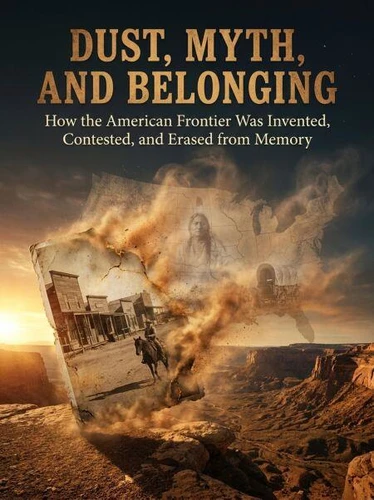
Dust, Myth, and Belonging. How the American Frontier Was Invented, Contested, and Erased from Memory
Par :Formats :
Disponible dans votre compte client Decitre ou Furet du Nord dès validation de votre commande. Le format ePub est :
- Compatible avec une lecture sur My Vivlio (smartphone, tablette, ordinateur)
- Compatible avec une lecture sur liseuses Vivlio
- Pour les liseuses autres que Vivlio, vous devez utiliser le logiciel Adobe Digital Edition. Non compatible avec la lecture sur les liseuses Kindle, Remarkable et Sony
 , qui est-ce ?
Notre partenaire de plateforme de lecture numérique où vous retrouverez l'ensemble de vos ebooks gratuitement
Pour en savoir plus sur nos ebooks, consultez notre aide en ligne ici
C'est si simple ! Lisez votre ebook avec l'app Vivlio sur votre tablette, mobile ou ordinateur :

- Nombre de pages489
- FormatePub
- ISBN978-3-565-63453-8
- EAN9783565634538
- Date de parution11/08/2026
- Protection num.pas de protection
- Taille1 Mo
- Infos supplémentairesepub
- ÉditeurEmphaloz Publishing House
Résumé
There is a version of the American West that never existed - and yet it shaped how a civilization understood itself. Dime novels and early Hollywood Westerns did not document the frontier; they manufactured it, compressing decades of territorial violence, economic desperation, and ethnic coexistence into a single heroic narrative centered on a white male settler and a rifle. That image, endlessly reproduced, displaced the actual history beneath it.
Megan Kate Nelson's scholarship forms the departure point for a deeper inquiry: not merely what was distorted, but why the distortion proved so durable, and who it cost. The frontier was populated by those the myth systematically erased. Transcontinental Chinese laborers built the infrastructure of westward expansion under conditions that bordered on coerced servitude, yet appear nowhere in the popular iconography.
Black cowboys made up a substantial share of the cattle-driving workforce; their presence was excised from the cinematic archive before it was ever fully acknowledged. Indigenous communities - already living within complex land tenure systems - were reframed as obstacles rather than inhabitants, a rhetorical move that preceded and enabled their legal dispossession. Each erasure served a function: to render the land available, narratively, before it was made available legally. The Homestead Act of 1862 translated this narrative logic into federal policy.
Megan Kate Nelson's scholarship forms the departure point for a deeper inquiry: not merely what was distorted, but why the distortion proved so durable, and who it cost. The frontier was populated by those the myth systematically erased. Transcontinental Chinese laborers built the infrastructure of westward expansion under conditions that bordered on coerced servitude, yet appear nowhere in the popular iconography.
Black cowboys made up a substantial share of the cattle-driving workforce; their presence was excised from the cinematic archive before it was ever fully acknowledged. Indigenous communities - already living within complex land tenure systems - were reframed as obstacles rather than inhabitants, a rhetorical move that preceded and enabled their legal dispossession. Each erasure served a function: to render the land available, narratively, before it was made available legally. The Homestead Act of 1862 translated this narrative logic into federal policy.