SOLDES
Jusqu'à -70% sur une sélection d'articles*

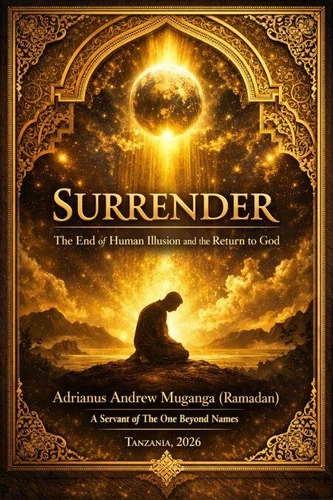
Surrender: The End of Human Illusion and the Return to God. 17, #18
Par :Formats :
Disponible dans votre compte client Decitre ou Furet du Nord dès validation de votre commande. Le format ePub est :
- Compatible avec une lecture sur My Vivlio (smartphone, tablette, ordinateur)
- Compatible avec une lecture sur liseuses Vivlio
- Pour les liseuses autres que Vivlio, vous devez utiliser le logiciel Adobe Digital Edition. Non compatible avec la lecture sur les liseuses Kindle, Remarkable et Sony
 , qui est-ce ?
Notre partenaire de plateforme de lecture numérique où vous retrouverez l'ensemble de vos ebooks gratuitement
Pour en savoir plus sur nos ebooks, consultez notre aide en ligne ici
C'est si simple ! Lisez votre ebook avec l'app Vivlio sur votre tablette, mobile ou ordinateur :

- FormatePub
- ISBN978-1-105-78059-2
- EAN9781105780592
- Date de parution18/01/2026
- Protection num.pas de protection
- Infos supplémentairesepub
- ÉditeurLulu.com
Résumé
SURRENDER: The End of Human Illusion and the Return to God is a reflective exploration of the human condition beneath belief, culture, ideology, and progress. Rather than offering doctrine, self-help techniques, or philosophical systems, this book examines the deeper orientation of human consciousness that shapes suffering, identity, and meaning. Despite unprecedented advancement in knowledge, technology, and power, humanity remains increasingly anxious, divided, and restless.
This work argues that the central crisis of the modern world is not primarily political, economic, or moral, but internal. At its root lies the loss of surrender and the normalization of resistance within consciousness. From this resistance emerge ego, attachment, fear, and the persistent illusion of control that governs both personal experience and collective life. The book traces the human journey from an original state of alignment and trust to the rise of self-centered awareness, fragmentation, and inner conflict.
It explores how ego becomes an organizing structure, how identity forms around resistance, and how separation from God is experienced not as divine absence, but as inner unrest that obscures presence. Religion, philosophy, and social systems are examined as responses to this fracture rather than its cause. Surrender reframes modern struggles such as anxiety, dissatisfaction, compulsive progress, and technological excess as symptoms rather than origins.
It shows why progress without humility intensifies instability, why freedom without alignment becomes a burden, and why knowledge alone cannot restore peace. Surrender is defined not as weakness, passivity, or blind obedience, but as the end of resistance the restoration of correct orientation between the human being and the Divine beyond institutions, ideologies, and labels. Where surrender returns, inner conflict settles, attachment loosens, and action becomes coherent rather than compulsive.
This book does not seek to persuade, convert, or instruct. It invites observation, recognition, and remembrance. Responsibility for interpretation rests with the reader. Written for a century in visible collapse but not confined to it, Surrender speaks to those who sense that something essential has been misplaced beneath effort, belief, and achievement. It offers no promise of transformation only return.
This work argues that the central crisis of the modern world is not primarily political, economic, or moral, but internal. At its root lies the loss of surrender and the normalization of resistance within consciousness. From this resistance emerge ego, attachment, fear, and the persistent illusion of control that governs both personal experience and collective life. The book traces the human journey from an original state of alignment and trust to the rise of self-centered awareness, fragmentation, and inner conflict.
It explores how ego becomes an organizing structure, how identity forms around resistance, and how separation from God is experienced not as divine absence, but as inner unrest that obscures presence. Religion, philosophy, and social systems are examined as responses to this fracture rather than its cause. Surrender reframes modern struggles such as anxiety, dissatisfaction, compulsive progress, and technological excess as symptoms rather than origins.
It shows why progress without humility intensifies instability, why freedom without alignment becomes a burden, and why knowledge alone cannot restore peace. Surrender is defined not as weakness, passivity, or blind obedience, but as the end of resistance the restoration of correct orientation between the human being and the Divine beyond institutions, ideologies, and labels. Where surrender returns, inner conflict settles, attachment loosens, and action becomes coherent rather than compulsive.
This book does not seek to persuade, convert, or instruct. It invites observation, recognition, and remembrance. Responsibility for interpretation rests with the reader. Written for a century in visible collapse but not confined to it, Surrender speaks to those who sense that something essential has been misplaced beneath effort, belief, and achievement. It offers no promise of transformation only return.
A propos de Adrianus Andrew Muganga (Ramad





0,99 €


0,99 €
0,99 €