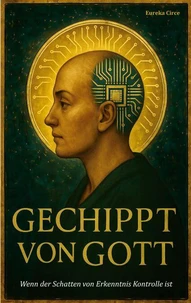



Eureka Circe is the editor and curator of the book series "DEUS EX MACHINA" and the present volume "I will be a female Bishop! - The Basics of Sermons on Happiness and other religious policy field analyses (DEUS EX MACHINA - Part IV)".
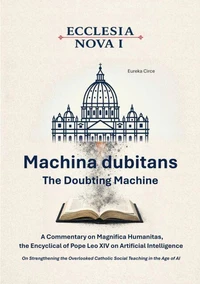
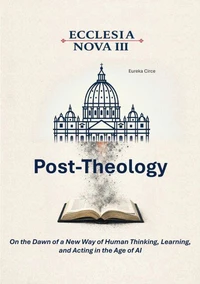
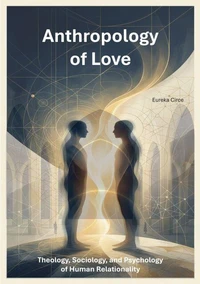
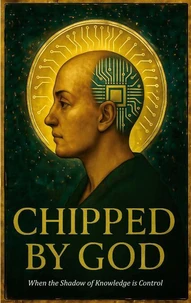
Also published are: "DEUS EX MACHINA - Or: On questioning Life" (Part I - ISBN 9783758340222), "Homecoming from the Pope" (Part II - ISBN 9783769357950) and "Faith is like Dancing" - "Glauben ist wie Tanzen - Vom Glauben bewegt als Christ:in wachsen.
Training book for building religious skills" (Part III - ISBN 9783819296307). With the work "DEUS EX MACHINA", the curator is committed to documenting and, if necessary, discussing the texts of artificial intelligence in a religious and theological context. Her thesis: "Artificial intelligence (AI) represents a profound turning point because it fundamentally changes the relationship between humans, knowledge and access to the world - not only technically, but also culturally, epistemologically and socially.
It opens up new access to knowledge and leads to its multiplication and democratization: AI systems make information available at a low threshold - often without traditional reading or in-depth prior knowledge. This fundamentally changes how we think, learn and understand, and at the same time promotes a new form of individualization of thought - which can also be exemplified by spiritual belief. What's more, machines are now generating meaning - texts, images, arguments - where previously only human expertise was required.
This has long-term consequences for education, science, politics and religion."
Training book for building religious skills" (Part III - ISBN 9783819296307). With the work "DEUS EX MACHINA", the curator is committed to documenting and, if necessary, discussing the texts of artificial intelligence in a religious and theological context. Her thesis: "Artificial intelligence (AI) represents a profound turning point because it fundamentally changes the relationship between humans, knowledge and access to the world - not only technically, but also culturally, epistemologically and socially.
It opens up new access to knowledge and leads to its multiplication and democratization: AI systems make information available at a low threshold - often without traditional reading or in-depth prior knowledge. This fundamentally changes how we think, learn and understand, and at the same time promotes a new form of individualization of thought - which can also be exemplified by spiritual belief. What's more, machines are now generating meaning - texts, images, arguments - where previously only human expertise was required.
This has long-term consequences for education, science, politics and religion."