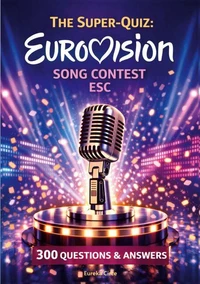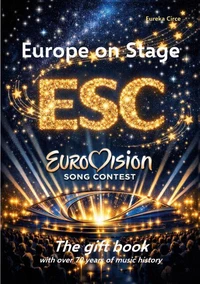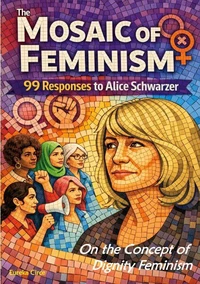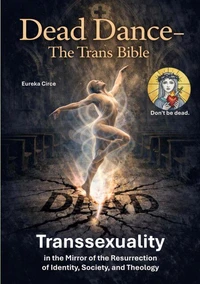
Eureka Circe curates books on theology, AI, human dignity, feminism, and naturopathy.
Nouveauté
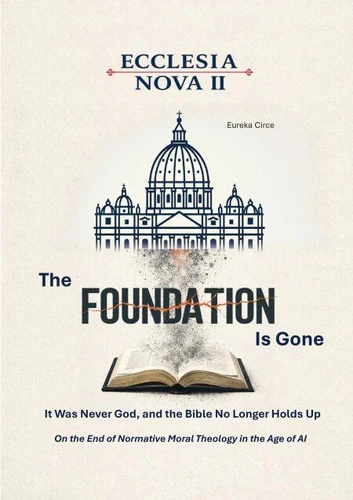
Ecclesia Nova II - The Foundation Is Gone. It Was Never God, and the Bible No Longer Holds Up - On the End of Normative Moral Theology in the Age of AI
Par :Formats :
Disponible dans votre compte client Decitre ou Furet du Nord dès validation de votre commande. Le format ePub est :
- Compatible avec une lecture sur My Vivlio (smartphone, tablette, ordinateur)
- Compatible avec une lecture sur liseuses Vivlio
- Pour les liseuses autres que Vivlio, vous devez utiliser le logiciel Adobe Digital Edition. Non compatible avec la lecture sur les liseuses Kindle, Remarkable et Sony
 , qui est-ce ?
Notre partenaire de plateforme de lecture numérique où vous retrouverez l'ensemble de vos ebooks gratuitement
Pour en savoir plus sur nos ebooks, consultez notre aide en ligne ici
C'est si simple ! Lisez votre ebook avec l'app Vivlio sur votre tablette, mobile ou ordinateur :

- Nombre de pages296
- FormatePub
- ISBN978-3-6963-4859-5
- EAN9783696348595
- Date de parution22/07/2026
- Protection num.pas de protection
- Taille8 Mo
- Infos supplémentairesepub
- ÉditeurBoD - Books on Demand
Résumé
The foundation is gone.
The Bible was never a simple moral code. It is not a timeless code of law, but a polyphonic archive of religious experiences, historical struggles, cultural influences, and moral contradictions. This is precisely where its strength - and its limitation - lie.
Ecclesia Nova II asks whether the Bible, revelation, natural law, and the magisterium can still serve as the ultimate authorities for moral justification today.
The volume examines the normative foundations of church moral theology through its most challenging test cases: violence in the name of God, slavery, gender hierarchy, apocalyptic worldviews, and the church's control over the body, guilt, and sexuality. The result is a turning point: Where biblical texts legitimize violence, condone slavery, subordinate women, or shame people through sacred regimes of guilt, one can no longer simply say, "God wills it so." Moral validity arises not from religious authority, but from public justifiability, human dignity, justice, freedom, protection from violence, and real responsibility. Artificial intelligence reinforces this finding.
It does not replace theology or ethics, but it makes texts comparable, reveals contradictions, and allows gaps in reasoning to be examined. In the age of AI, church morality can no longer be protected by sacred assertions. It must demonstrate that it holds up to scrutiny. This volume is not a rejection of religion. It is a rejection of unchecked ultimate moral authority. A corrected Bible remains a testimony, an archive, a language, and an inspiration.
But Holy Scripture no longer reigns unchallenged - and not just since the advent of AI. Following this loss, the real question arises: How can theology move forward if God was never the guarantor of the morality that people have attributed to him?
The volume examines the normative foundations of church moral theology through its most challenging test cases: violence in the name of God, slavery, gender hierarchy, apocalyptic worldviews, and the church's control over the body, guilt, and sexuality. The result is a turning point: Where biblical texts legitimize violence, condone slavery, subordinate women, or shame people through sacred regimes of guilt, one can no longer simply say, "God wills it so." Moral validity arises not from religious authority, but from public justifiability, human dignity, justice, freedom, protection from violence, and real responsibility. Artificial intelligence reinforces this finding.
It does not replace theology or ethics, but it makes texts comparable, reveals contradictions, and allows gaps in reasoning to be examined. In the age of AI, church morality can no longer be protected by sacred assertions. It must demonstrate that it holds up to scrutiny. This volume is not a rejection of religion. It is a rejection of unchecked ultimate moral authority. A corrected Bible remains a testimony, an archive, a language, and an inspiration.
But Holy Scripture no longer reigns unchallenged - and not just since the advent of AI. Following this loss, the real question arises: How can theology move forward if God was never the guarantor of the morality that people have attributed to him?
A propos de Eureka Circe
9,99 €