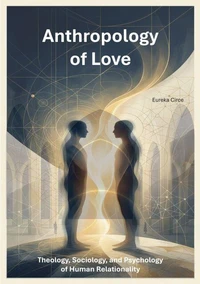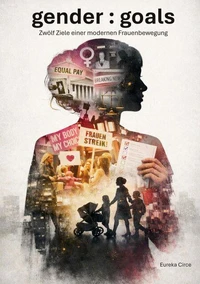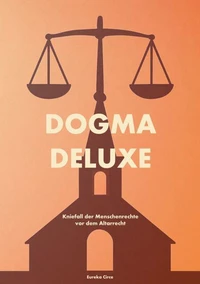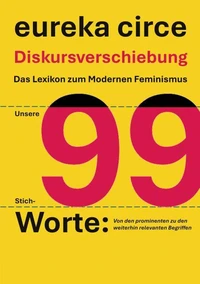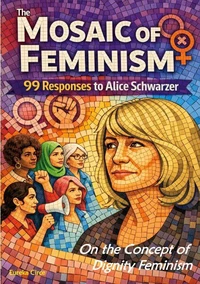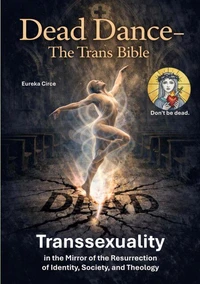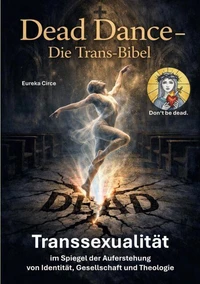



Eureka Circe is the editor and curator of various book series on theology (e.g., "Unauthorized Grace" or "Deus Ex Machina - On the Life of Inquiry"), as well as series on personal development and naturopathy. Also published are the volumes on women's politics "Alice and the Wonderyes - Where and Why Feminism Fails in the Catholic Church, " "MAIDEN'S MANIFESTO - The Female Flame, " "DEAD DANCE - The Trans Bible, " "DIGNITAS OMNIUM - The Dignity of All: The Vatican's Encyclical on Human Rights (Not Yet Set in Stone)" and, most recently, "Discourse Shift - The Lexicon of Modern Feminism."
Her thesis: "Artificial Intelligence (AI) represents a profound turning point because it fundamentally changes the relationship between humans, knowledge, and access to the world - not only technically, but also culturally, epistemologically, and socially.
It opens up a new access to knowledge and leads to its proliferation and democratization: AI systems make information readily available - often without traditional reading or in-depth prior knowledge. This fundamentally changes how we think, learn, and understand, while simultaneously fostering a new form of individualization of thought - which can also be exemplified in the context of spiritual belief.
Moreover: machines today generate meaning - texts, images, arguments - where previously only human expertise was required. This has long-term consequences for education, science, politics, and religion."
It opens up a new access to knowledge and leads to its proliferation and democratization: AI systems make information readily available - often without traditional reading or in-depth prior knowledge. This fundamentally changes how we think, learn, and understand, while simultaneously fostering a new form of individualization of thought - which can also be exemplified in the context of spiritual belief.
Moreover: machines today generate meaning - texts, images, arguments - where previously only human expertise was required. This has long-term consequences for education, science, politics, and religion."