Nouveauté
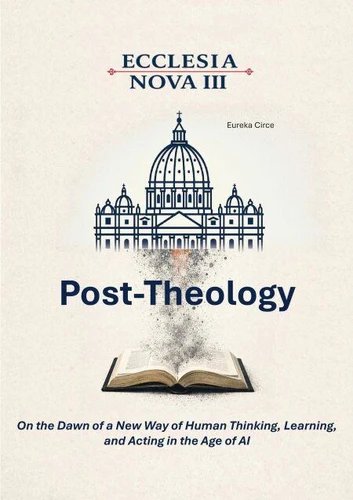
Ecclesia Nova III - Post-Theology. On the Dawn of a New Way of Human Thinking, Learning, and Acting in the Age of AI
Par :Formats :
Disponible dans votre compte client Decitre ou Furet du Nord dès validation de votre commande. Le format ePub est :
- Compatible avec une lecture sur My Vivlio (smartphone, tablette, ordinateur)
- Compatible avec une lecture sur liseuses Vivlio
- Pour les liseuses autres que Vivlio, vous devez utiliser le logiciel Adobe Digital Edition. Non compatible avec la lecture sur les liseuses Kindle, Remarkable et Sony
 , qui est-ce ?
Notre partenaire de plateforme de lecture numérique où vous retrouverez l'ensemble de vos ebooks gratuitement
Pour en savoir plus sur nos ebooks, consultez notre aide en ligne ici
C'est si simple ! Lisez votre ebook avec l'app Vivlio sur votre tablette, mobile ou ordinateur :

- Nombre de pages298
- FormatePub
- ISBN978-3-6963-4862-5
- EAN9783696348625
- Date de parution22/07/2026
- Protection num.pas de protection
- Taille9 Mo
- Infos supplémentairesepub
- ÉditeurBoD - Books on Demand
Résumé
Post-Theology
What becomes possible after the loss of the foundation?
When the Bible, revelation, natural law, and the magisterium no longer serve as unchecked ultimate authorities for moral justification, religion does not come to an end. What ends is a particular form of religious power.
Ecclesia Nova III asks how theology can continue to think and act in the wake of this loss. The volume develops the perspective of a post-theology: religion does not disappear, but remains significant as language, ritual, symbol, comfort, memory, community, and the practice of meaning.
But it may no longer lay down moral laws as sacred. It must publicly justify its normative claims. At the center is sexual morality as the most rigorous crash test. It is precisely where the Church passes judgment on the body, desire, marriage, contraception, guilt, shame, same-sex love, and intimate relationships that it becomes clear whether its morality still holds - or is merely asserted. A post-theological sexual ethics no longer asks first about forbidden acts, but rather about dignity, consent, nonviolence, equality, responsibility, care, and justice. Artificial intelligence does not yet become the new magisterium in this context.
It replaces neither conscience nor theology. But it acts as a mirror and scanner of church processes and offers guidance: it makes contradictions visible, examines justifications, compares traditions, and reveals where religious language protects people - and where it shames, excludes, or harms them. Post-theology bids farewell to absolute certainties of salvation, but not to hope. It bids farewell to sacred regimes of guilt, but not to responsibility.
It bids farewell to religious dominion over morality, but not to rituals, symbols, and community. The end of normative moral theology does not usher in a void. It ushers in a more open, humble, and adaptable religion in a pluralistic, scientifically informed, and technologically shaped society.
But it may no longer lay down moral laws as sacred. It must publicly justify its normative claims. At the center is sexual morality as the most rigorous crash test. It is precisely where the Church passes judgment on the body, desire, marriage, contraception, guilt, shame, same-sex love, and intimate relationships that it becomes clear whether its morality still holds - or is merely asserted. A post-theological sexual ethics no longer asks first about forbidden acts, but rather about dignity, consent, nonviolence, equality, responsibility, care, and justice. Artificial intelligence does not yet become the new magisterium in this context.
It replaces neither conscience nor theology. But it acts as a mirror and scanner of church processes and offers guidance: it makes contradictions visible, examines justifications, compares traditions, and reveals where religious language protects people - and where it shames, excludes, or harms them. Post-theology bids farewell to absolute certainties of salvation, but not to hope. It bids farewell to sacred regimes of guilt, but not to responsibility.
It bids farewell to religious dominion over morality, but not to rituals, symbols, and community. The end of normative moral theology does not usher in a void. It ushers in a more open, humble, and adaptable religion in a pluralistic, scientifically informed, and technologically shaped society.
A propos de Eureka Circe


9,99 €