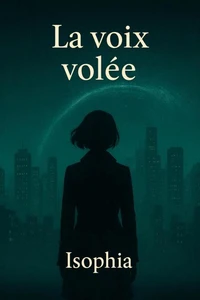
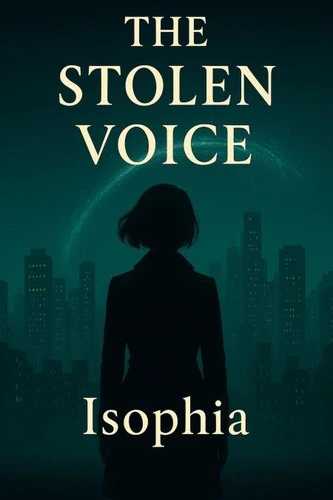
When a voice can be copied, identity becomes negotiable. This is a testimony spoken after speech has been taken. Set in a near-future society shaped by animal cloning, cross-species organ grafting, and artificial intelligence modeled on human cognition, The Stolen Voice follows a woman who discovers that her biometric voiceprint has been stolen-and possibly replicated. Public housing blocks, malfunctioning sprinklers, and opaque classification systems form the terrain through which she confronts a deeper uncertainty: not merely the loss of her data, but the instability of her own originality.
As voice and body become transferable assets, identity fractures into copies, records, and residual traces. The narrative examines how algorithmic governance and biotechnological expansion reorganize ethics, personhood, and evidence, asking what kind of evolution emerges when consciousness is no longer singular but distributed across contested archives.
When a voice can be copied, identity becomes negotiable. This is a testimony spoken after speech has been taken. Set in a near-future society shaped by animal cloning, cross-species organ grafting, and artificial intelligence modeled on human cognition, The Stolen Voice follows a woman who discovers that her biometric voiceprint has been stolen-and possibly replicated. Public housing blocks, malfunctioning sprinklers, and opaque classification systems form the terrain through which she confronts a deeper uncertainty: not merely the loss of her data, but the instability of her own originality.
As voice and body become transferable assets, identity fractures into copies, records, and residual traces. The narrative examines how algorithmic governance and biotechnological expansion reorganize ethics, personhood, and evidence, asking what kind of evolution emerges when consciousness is no longer singular but distributed across contested archives.


 , qui est-ce ?