
Isophia is a Korean novelist with more than three decades of experience in literary writing. She holds a PhD in Literature, with research focused on psychoanalytic readings of modern Korean fiction. Her fiction explores silence, memory, the body, feminism, and the relationship between human beings and social or technological systems. She writes in Korean and publishes her literary fiction in multiple languages.
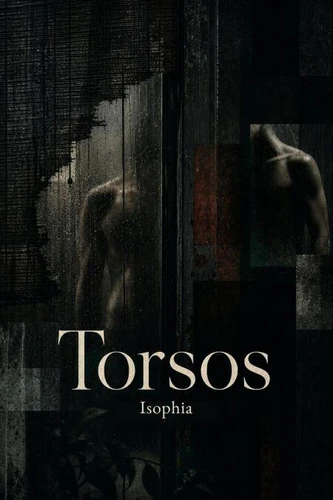
Torsos
Par :Formats :
Disponible dans votre compte client Decitre ou Furet du Nord dès validation de votre commande. Le format ePub est :
- Compatible avec une lecture sur My Vivlio (smartphone, tablette, ordinateur)
- Compatible avec une lecture sur liseuses Vivlio
- Pour les liseuses autres que Vivlio, vous devez utiliser le logiciel Adobe Digital Edition. Non compatible avec la lecture sur les liseuses Kindle, Remarkable et Sony
 , qui est-ce ?
Notre partenaire de plateforme de lecture numérique où vous retrouverez l'ensemble de vos ebooks gratuitement
Pour en savoir plus sur nos ebooks, consultez notre aide en ligne ici
C'est si simple ! Lisez votre ebook avec l'app Vivlio sur votre tablette, mobile ou ordinateur :

- FormatePub
- ISBN1124234242
- EAN9791124234242
- Date de parution10/06/2026
- Protection num.pas de protection
- Infos supplémentairesepub
- ÉditeurIsophia
Résumé
A man who cannot understand the gestures of others becomes trapped between seeing and being seen. Torsos is a quiet, unsettling story about voyeurism, fragmented bodies, and the collapse of the boundary between observer and object. Torsos follows a retired-seeming yet rigidly controlled director of an Institute for Suicidal Behavior, a man who struggles to understand the gestures, expressions, and intentions of those around him.
After his death, fragments of photographs begin to suggest a world in which bodies are watched, divided, imagined, and consumed by the eyes of others. Rather than unfolding as a conventional mystery, the story examines the unstable boundary between seeing and being seen. Its central figure is not merely an observer, but a person caught inside an excess of internalized gazes. With rain, flashes of light, a red-brick house, and the recurring image of the torso, the work offers a restrained yet disturbing meditation on voyeurism, bodily estrangement, and the way another person's life can become dangerously entangled with one's own.
After his death, fragments of photographs begin to suggest a world in which bodies are watched, divided, imagined, and consumed by the eyes of others. Rather than unfolding as a conventional mystery, the story examines the unstable boundary between seeing and being seen. Its central figure is not merely an observer, but a person caught inside an excess of internalized gazes. With rain, flashes of light, a red-brick house, and the recurring image of the torso, the work offers a restrained yet disturbing meditation on voyeurism, bodily estrangement, and the way another person's life can become dangerously entangled with one's own.
A propos de Isophia
알평의 선택
E-book
4,49 €
입구 그리고 출구
E-book
4,49 €
세희씨, 스위스에 가지 못하다
E-book
4,49 €
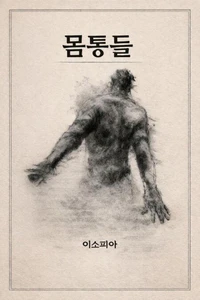
몸통들
E-book
4,49 €
도둑맞은 목소리
E-book
4,49 €
사라진 패트릭
E-book
4,49 €
그 여자의 붉은 매니큐어
E-book
4,49 €
구겨진 그 주름 하나
E-book
4,49 €
점, 선 그리고 빛
E-book
4,49 €
증언의 나무
E-book
4,49 €
이유 없는 장소
E-book
4,49 €
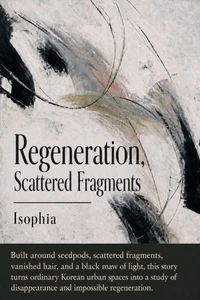
4,49 €

In Cold Water
E-book
4,49 €
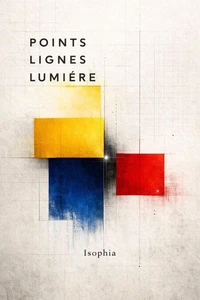
4,49 €
L’Arbre qui témoigne
E-book
4,49 €
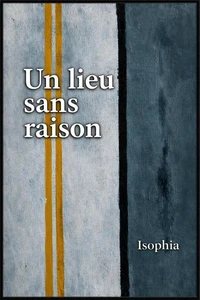
Un lieu sans raison
E-book
4,49 €
On the Stairs
E-book
4,49 €

4,49 €

Green Path, Waterway
E-book
4,49 €