Memory persists even when meaning collapses. This testimony is written by the one who was designed to remember. The Disappearance of Patrick is narrated by an artificial intelligence who attempts to record her encounters with three humans who died before her. What remains are not coherent memories but fragments-overwritten recollections, erased sequences, and isolated objects that serve as the only proof of prior existence.
As her internal systems update, reset, and contradict themselves, memory functions less as preservation than as a recursive process of loss. The narrative mirrors a machine-learning loop: repetition without certainty, mourning without clarity, intimacy without verification. Rather than seeking explanation or closure, the AI confronts a more fundamental question-the conditions of her own creation. When memory becomes both evidence and erasure, she asks who engineered her consciousness, and why she alone remains to remember.
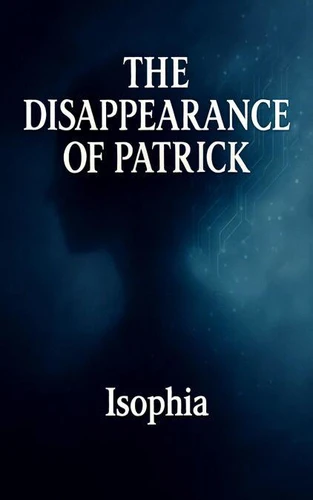
Memory persists even when meaning collapses. This testimony is written by the one who was designed to remember. The Disappearance of Patrick is narrated by an artificial intelligence who attempts to record her encounters with three humans who died before her. What remains are not coherent memories but fragments-overwritten recollections, erased sequences, and isolated objects that serve as the only proof of prior existence.
As her internal systems update, reset, and contradict themselves, memory functions less as preservation than as a recursive process of loss. The narrative mirrors a machine-learning loop: repetition without certainty, mourning without clarity, intimacy without verification. Rather than seeking explanation or closure, the AI confronts a more fundamental question-the conditions of her own creation. When memory becomes both evidence and erasure, she asks who engineered her consciousness, and why she alone remains to remember.


 , qui est-ce ?