
Isophia is a Korean novelist with more than three decades of experience in literary writing. She holds a PhD in Literature, with research focused on psychoanalytic readings of modern Korean fiction. Her fiction explores silence, memory, the body, feminism, and the relationship between human beings and social or technological systems. She writes in Korean and publishes her literary fiction in multiple languages.
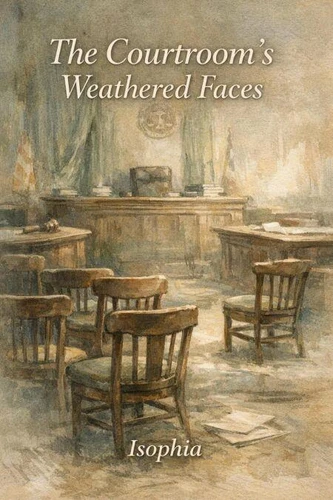
The Courtroom's Weathered Faces
Par :Formats :
Disponible dans votre compte client Decitre ou Furet du Nord dès validation de votre commande. Le format ePub est :
- Compatible avec une lecture sur My Vivlio (smartphone, tablette, ordinateur)
- Compatible avec une lecture sur liseuses Vivlio
- Pour les liseuses autres que Vivlio, vous devez utiliser le logiciel Adobe Digital Edition. Non compatible avec la lecture sur les liseuses Kindle, Remarkable et Sony
 , qui est-ce ?
Notre partenaire de plateforme de lecture numérique où vous retrouverez l'ensemble de vos ebooks gratuitement
Pour en savoir plus sur nos ebooks, consultez notre aide en ligne ici
C'est si simple ! Lisez votre ebook avec l'app Vivlio sur votre tablette, mobile ou ordinateur :

- FormatePub
- ISBN1124234037
- EAN9791124234037
- Date de parution16/02/2026
- Protection num.pas de protection
- Infos supplémentairesepub
- Éditeur나이스데이
Résumé
Judgment begins long before testimony is spoken. In this courtroom, perception itself becomes evidence. Returning to the courtroom that once reshaped his family's life, a man observes judges, prosecutors, and lawyers whose faces resemble creatures hardened by repetition-mudskipper, hawk, toad. As a trained face-reader, he recognizes that verdicts are already forming before language enters the room.
Testimony unfolds within a structure where multiple fraud cases are compressed, responsibility is displaced, and linguistic coercion quietly governs what may be said. Blending legal realism with sensory metaphor, the story examines how institutional bias operates through perception rather than explicit command. Justice appears less as deliberation than as an economy of gazes, where truth is filtered through habit, hierarchy, and misrecognition, and where victims rarely recover what was lost.
Testimony unfolds within a structure where multiple fraud cases are compressed, responsibility is displaced, and linguistic coercion quietly governs what may be said. Blending legal realism with sensory metaphor, the story examines how institutional bias operates through perception rather than explicit command. Justice appears less as deliberation than as an economy of gazes, where truth is filtered through habit, hierarchy, and misrecognition, and where victims rarely recover what was lost.
A propos de Isophia
알평의 선택
E-book
4,49 €
입구 그리고 출구
E-book
4,49 €
세희씨, 스위스에 가지 못하다
E-book
4,49 €
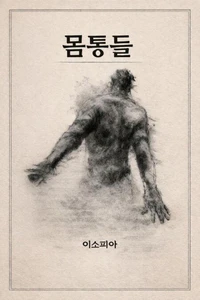
몸통들
E-book
4,49 €
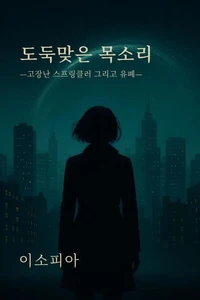
도둑맞은 목소리
E-book
4,49 €
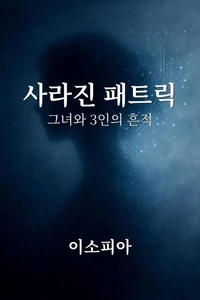
사라진 패트릭
E-book
4,49 €
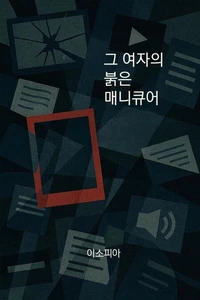
그 여자의 붉은 매니큐어
E-book
4,49 €
구겨진 그 주름 하나
E-book
4,49 €
점, 선 그리고 빛
E-book
4,49 €
증언의 나무
E-book
4,49 €
이유 없는 장소
E-book
4,49 €
4,49 €

In Cold Water
E-book
4,49 €
4,49 €
L’Arbre qui témoigne
E-book
4,49 €
Un lieu sans raison
E-book
4,49 €
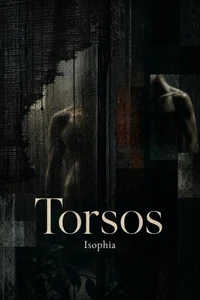
Torsos
E-book
4,49 €
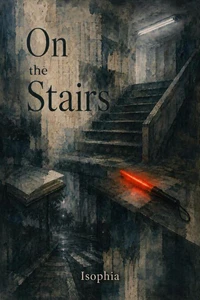
On the Stairs
E-book
4,49 €
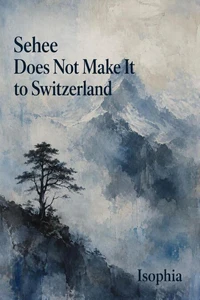
4,49 €
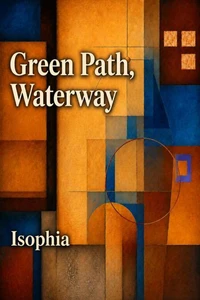
Green Path, Waterway
E-book
4,49 €