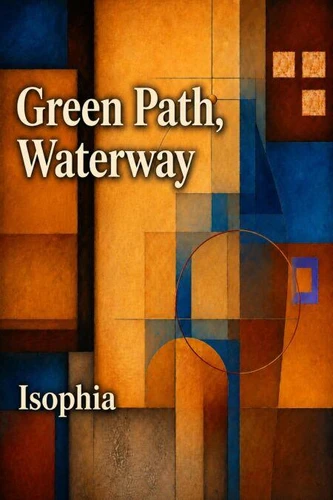
As she moves along the waterway and past the paintings on her way to work, a woman quietly crosses once more the losses and remnants of life she has long put off confronting. Beneath the outward form of an urban walk, this work unfolds the inner life of a woman who has endured years of displacement and abandonment, layer by layer, through images of water and painterly scenes. Green Path, Waterway is a novel that follows a woman on her commute to work, delicately portraying how an urban footpath, a stream, public installations, and scenes from famous paintings are transformed into passages of memory and loss.
By placing side by side such striking images as an old woman gathering discarded cardboard, a heron trapped beneath a covered stretch of stream, a dog pulled along on a leash, the face of a daughter, and the image of women in a boat, the work compresses, without exaggeration, the sensations of abandonment, labor, aging, and retirement sedimented within a single life. Rooted in the concrete locality of Hongje Stream, the novel is threaded throughout by the movement of water-its flow, its lower reaches, its sweep, its stagnation-and by a faint but persistent will to reach a life beyond the water.
Rather than appealing directly through overt emotion, the work allows feeling to seep in belatedly through the exact observation of things and landscapes. Bringing together the urban walk, a woman's life, painterly imagination, and the symbolism of water in restrained prose, this is a quiet novel whose resonance lingers long after reading.
As she moves along the waterway and past the paintings on her way to work, a woman quietly crosses once more the losses and remnants of life she has long put off confronting. Beneath the outward form of an urban walk, this work unfolds the inner life of a woman who has endured years of displacement and abandonment, layer by layer, through images of water and painterly scenes. Green Path, Waterway is a novel that follows a woman on her commute to work, delicately portraying how an urban footpath, a stream, public installations, and scenes from famous paintings are transformed into passages of memory and loss.
By placing side by side such striking images as an old woman gathering discarded cardboard, a heron trapped beneath a covered stretch of stream, a dog pulled along on a leash, the face of a daughter, and the image of women in a boat, the work compresses, without exaggeration, the sensations of abandonment, labor, aging, and retirement sedimented within a single life. Rooted in the concrete locality of Hongje Stream, the novel is threaded throughout by the movement of water-its flow, its lower reaches, its sweep, its stagnation-and by a faint but persistent will to reach a life beyond the water.
Rather than appealing directly through overt emotion, the work allows feeling to seep in belatedly through the exact observation of things and landscapes. Bringing together the urban walk, a woman's life, painterly imagination, and the symbolism of water in restrained prose, this is a quiet novel whose resonance lingers long after reading.

 , qui est-ce ?