
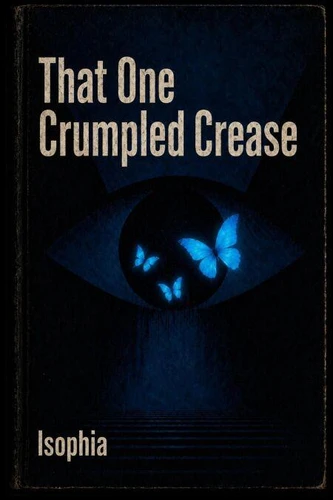
Isophia is a Korean novelist with more than three decades of experience in literary writing. She holds a PhD in Literature, with research focused on psychoanalytic readings of modern Korean fiction. Her fiction explores silence, memory, the body, feminism, and the relationship between human beings and social or technological systems. She writes in Korean and publishes her literary fiction in multiple languages.
That One Crumpled Crease
Par :Formats :
Disponible dans votre compte client Decitre ou Furet du Nord dès validation de votre commande. Le format ePub est :
- Compatible avec une lecture sur My Vivlio (smartphone, tablette, ordinateur)
- Compatible avec une lecture sur liseuses Vivlio
- Pour les liseuses autres que Vivlio, vous devez utiliser le logiciel Adobe Digital Edition. Non compatible avec la lecture sur les liseuses Kindle, Remarkable et Sony
 , qui est-ce ?
Notre partenaire de plateforme de lecture numérique où vous retrouverez l'ensemble de vos ebooks gratuitement
Pour en savoir plus sur nos ebooks, consultez notre aide en ligne ici
C'est si simple ! Lisez votre ebook avec l'app Vivlio sur votre tablette, mobile ou ordinateur :

- FormatePub
- ISBN1124234211
- EAN9791124234211
- Date de parution11/05/2026
- Protection num.pas de protection
- Infos supplémentairesepub
- ÉditeurIsophia
Résumé
After seeing a snake no one else can see, Myoryeong's world begins to crumple between reality and hallucination, surveillance and solitude. A convenience store, a YouTube psychiatrist, an algorithm, and a single banknote pass through one woman's mind, revealing the loneliest terror of modern city life. In That One Crumpled Crease, Myoryeong, a young convenience-store worker living alone in a studio apartment, tries to understand why she once saw a snake that no one else could see.
What begins as a private disturbance gradually spreads through her routines: YouTube lectures, algorithmic suspicion, sleep paralysis, a dream of smell, a mannequin-like customer, a damaged banknote, and butterflies that seem ready to leave the surface of money. This is not a conventional story of illness or revelation. Instead, it follows the fragile logic of perception itself: how an ordinary object becomes evidence, how a sound becomes myth, how a screen becomes a witness, and how a life of small routines can open into fear.
Written in a controlled yet hallucinatory style, the novella joins mundane realism with paranoid lyricism, tracing the uneasy border between proof and imagination, body and image, survival and disappearance.
What begins as a private disturbance gradually spreads through her routines: YouTube lectures, algorithmic suspicion, sleep paralysis, a dream of smell, a mannequin-like customer, a damaged banknote, and butterflies that seem ready to leave the surface of money. This is not a conventional story of illness or revelation. Instead, it follows the fragile logic of perception itself: how an ordinary object becomes evidence, how a sound becomes myth, how a screen becomes a witness, and how a life of small routines can open into fear.
Written in a controlled yet hallucinatory style, the novella joins mundane realism with paranoid lyricism, tracing the uneasy border between proof and imagination, body and image, survival and disappearance.
A propos de Isophia
그 여자의 붉은 매니큐어
E-book
4,49 €
구겨진 그 주름 하나
E-book
4,49 €
점, 선 그리고 빛
E-book
4,49 €
증언의 나무
E-book
4,49 €
이유 없는 장소
E-book
4,49 €
In Cold Water
E-book
4,49 €
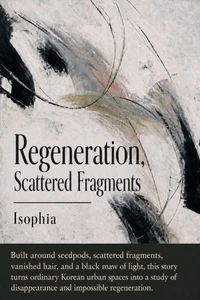
4,49 €
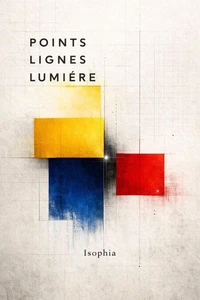
4,49 €
L’Arbre qui témoigne
E-book
4,49 €
Un lieu sans raison
E-book
4,49 €
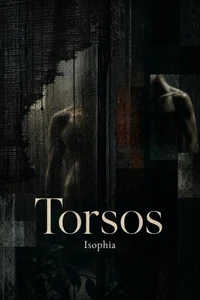
Torsos
E-book
4,49 €
On the Stairs
E-book
4,49 €
4,49 €
Sarah, Abraham
E-book
4,49 €
Green Path, Waterway
E-book
4,49 €
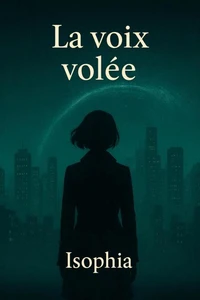
La voix volée
E-book
4,49 €
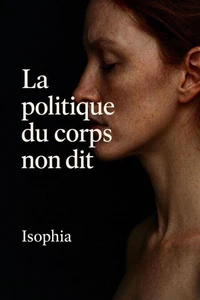
4,49 €
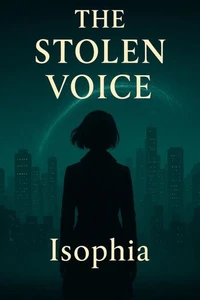
The Stolen Voice
E-book
4,49 €
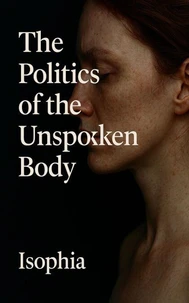
4,49 €