He creates business, history, and self-help books with a sharp, minimal, and internationally marketable tone.
Nouveauté
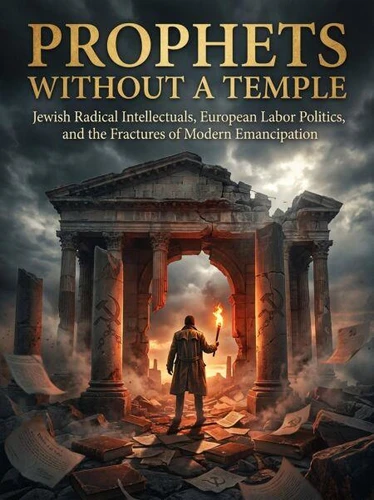
Prophets Without a Temple. Jewish Radical Intellectuals, European Labor Politics, and the Fractures of Modern Emancipation
Par :Formats :
Disponible dans votre compte client Decitre ou Furet du Nord dès validation de votre commande. Le format ePub est :
- Compatible avec une lecture sur My Vivlio (smartphone, tablette, ordinateur)
- Compatible avec une lecture sur liseuses Vivlio
- Pour les liseuses autres que Vivlio, vous devez utiliser le logiciel Adobe Digital Edition. Non compatible avec la lecture sur les liseuses Kindle, Remarkable et Sony
 , qui est-ce ?
Notre partenaire de plateforme de lecture numérique où vous retrouverez l'ensemble de vos ebooks gratuitement
Pour en savoir plus sur nos ebooks, consultez notre aide en ligne ici
C'est si simple ! Lisez votre ebook avec l'app Vivlio sur votre tablette, mobile ou ordinateur :

- Nombre de pages670
- FormatePub
- ISBN978-3-565-63500-9
- EAN9783565635009
- Date de parution11/08/2026
- Protection num.pas de protection
- Taille1 Mo
- Infos supplémentairesepub
- ÉditeurEmphaloz Publishing House
Résumé
There is a paradox embedded in modern European history that rarely receives the attention its scale demands. Among the most consequential architects of nineteenth-century labor politics, social philosophy, and civil protest theory were intellectuals shaped by a tradition that European modernity was simultaneously trying to absorb, marginalize, and transform. Jewish radical thought did not emerge in opposition to Jewish heritage.
For many of its central figures, it was an extension of it - a secularized inheritance of prophetic justice, Talmudic argumentation, and a communal ethics forged over centuries of statelessness. The labor movements that reshaped industrial Europe were not built by anonymous masses alone. They were theorized, organized, and argued into existence by individuals who carried double identities into every assembly hall and pamphlet press.
The tension between universal emancipation and particular belonging was not incidental to this intellectual tradition - it was its engine. Ferdinand Lassalle's vision of organized labor, Rosa Luxemburg's internationalist socialism, and the editorial networks of the Jewish labor press were not parallel projects. They were part of a coherent, if internally fractured, political imagination rooted in the specific experience of exclusion from the European nation-state. The fractures within this tradition were as formative as its cohesion.
For many of its central figures, it was an extension of it - a secularized inheritance of prophetic justice, Talmudic argumentation, and a communal ethics forged over centuries of statelessness. The labor movements that reshaped industrial Europe were not built by anonymous masses alone. They were theorized, organized, and argued into existence by individuals who carried double identities into every assembly hall and pamphlet press.
The tension between universal emancipation and particular belonging was not incidental to this intellectual tradition - it was its engine. Ferdinand Lassalle's vision of organized labor, Rosa Luxemburg's internationalist socialism, and the editorial networks of the Jewish labor press were not parallel projects. They were part of a coherent, if internally fractured, political imagination rooted in the specific experience of exclusion from the European nation-state. The fractures within this tradition were as formative as its cohesion.