There is a quiet paradox at the center of modern life: we are more informed than ever about mental health, yet increasingly disconnected from our own emotional experience. We have language for stress, trauma, and anxiety, but far less capacity to fully feel, process, and release what lives beneath these labels. Emotions are acknowledged, but often not metabolized. They are managed, suppressed, intellectualized, or deferred.
This book begins with a simple but consequential premise: unprocessed emotion does not disappear, it persists, adapts, and expresses itself through the body and behavior. Across decades of research in psychology, neuroscience, and physiology, a consistent pattern has emerged. Emotional suppression, whether conscious or automatic, is not a neutral act. It is a biological event. When an emotion is inhibited, the nervous system does not interpret this as resolution, but as incomplete processing.
The physiological activation associated with that emotion remains partially active, often outside of conscious awareness. Over time, this creates a cumulative burden, what researchers describe as chronic stress load or dysregulation. Yet suppression is not a failure of character. It is, more often, an adaptation. From early development onward, individuals learn, implicitly and explicitly, which emotions are acceptable and which are not.
Expressions of fear may be discouraged, anger punished, sadness dismissed, vulnerability ignored. In response, the organism adapts intelligently. Emotional expression is reduced to maintain safety, belonging, or stability. What begins as a protective strategy becomes a patterned response, embedded in neural pathways and reinforced over time. This adaptation is effective in the short term. It allows individuals to function, to perform, to maintain relationships, and to navigate complex social environments.
But over the long term, the cost becomes evident. Suppressed emotional material does not remain static. It accumulates. It influences perception, shapes behavior, and alters physiological regulation. It may manifest as persistent tension, anxiety, irritability, emotional numbness, or a diffuse sense of disconnection. In more severe forms, it contributes to burnout, depressive states, and trauma-related conditions.
The individual often experiences the outcome, but not the underlying cause. This gap, between experience and origin, is where many current approaches fall short. Contemporary mental health discourse has made significant progress in identifying and categorizing psychological conditions. However, there remains a fragmentation between understanding emotion cognitively and processing it physiologically.
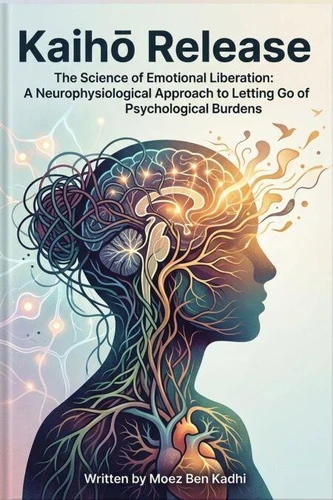
Insight alone does not resolve activation. Awareness without integration can even intensify internal conflict. What is needed is a framework that bridges knowledge and embodied experience. This is the context in which the concept of Kaiho is introduced. Kaiho, translated as "release" or "liberation, " is not used here as a metaphor, but as a functional model. It refers to the process by which previously inhibited emotional activation is allowed to move through, rather than remain within, the system.
It is not catharsis in its uncontrolled form, nor is it mere expression. It is a regulated, evidence-informed process of emotional completion.
There is a quiet paradox at the center of modern life: we are more informed than ever about mental health, yet increasingly disconnected from our own emotional experience. We have language for stress, trauma, and anxiety, but far less capacity to fully feel, process, and release what lives beneath these labels. Emotions are acknowledged, but often not metabolized. They are managed, suppressed, intellectualized, or deferred.
This book begins with a simple but consequential premise: unprocessed emotion does not disappear, it persists, adapts, and expresses itself through the body and behavior. Across decades of research in psychology, neuroscience, and physiology, a consistent pattern has emerged. Emotional suppression, whether conscious or automatic, is not a neutral act. It is a biological event. When an emotion is inhibited, the nervous system does not interpret this as resolution, but as incomplete processing.
The physiological activation associated with that emotion remains partially active, often outside of conscious awareness. Over time, this creates a cumulative burden, what researchers describe as chronic stress load or dysregulation. Yet suppression is not a failure of character. It is, more often, an adaptation. From early development onward, individuals learn, implicitly and explicitly, which emotions are acceptable and which are not.
Expressions of fear may be discouraged, anger punished, sadness dismissed, vulnerability ignored. In response, the organism adapts intelligently. Emotional expression is reduced to maintain safety, belonging, or stability. What begins as a protective strategy becomes a patterned response, embedded in neural pathways and reinforced over time. This adaptation is effective in the short term. It allows individuals to function, to perform, to maintain relationships, and to navigate complex social environments.
But over the long term, the cost becomes evident. Suppressed emotional material does not remain static. It accumulates. It influences perception, shapes behavior, and alters physiological regulation. It may manifest as persistent tension, anxiety, irritability, emotional numbness, or a diffuse sense of disconnection. In more severe forms, it contributes to burnout, depressive states, and trauma-related conditions.
The individual often experiences the outcome, but not the underlying cause. This gap, between experience and origin, is where many current approaches fall short. Contemporary mental health discourse has made significant progress in identifying and categorizing psychological conditions. However, there remains a fragmentation between understanding emotion cognitively and processing it physiologically.
Insight alone does not resolve activation. Awareness without integration can even intensify internal conflict. What is needed is a framework that bridges knowledge and embodied experience. This is the context in which the concept of Kaiho is introduced. Kaiho, translated as "release" or "liberation, " is not used here as a metaphor, but as a functional model. It refers to the process by which previously inhibited emotional activation is allowed to move through, rather than remain within, the system.
It is not catharsis in its uncontrolled form, nor is it mere expression. It is a regulated, evidence-informed process of emotional completion.

 , qui est-ce ?