OFFRE LISEUSES
Une liseuse achetée = une housse offerte* jusqu'au 21 juin

Nouveauté
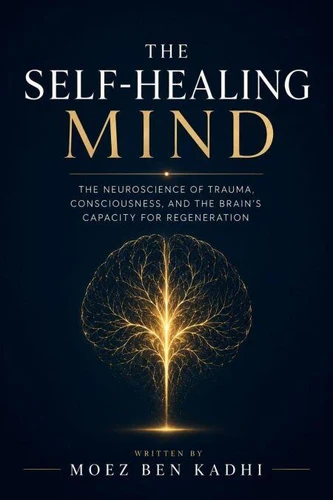
The Self-Healing Mind
Par :Formats :
Actuellement indisponible
Cet article est actuellement indisponible, il ne peut pas être commandé sur notre site pour le moment. Nous vous invitons à vous inscrire à l'alerte disponibilité, vous recevrez un e-mail dès que cet ouvrage sera à nouveau disponible.
Disponible dans votre compte client Decitre ou Furet du Nord dès validation de votre commande. Le format ePub est :
- Compatible avec une lecture sur My Vivlio (smartphone, tablette, ordinateur)
- Compatible avec une lecture sur liseuses Vivlio
- Pour les liseuses autres que Vivlio, vous devez utiliser le logiciel Adobe Digital Edition. Non compatible avec la lecture sur les liseuses Kindle, Remarkable et Sony
 , qui est-ce ?
Notre partenaire de plateforme de lecture numérique où vous retrouverez l'ensemble de vos ebooks gratuitement
Pour en savoir plus sur nos ebooks, consultez notre aide en ligne ici
C'est si simple ! Lisez votre ebook avec l'app Vivlio sur votre tablette, mobile ou ordinateur :

- FormatePub
- ISBN8235903913
- EAN9798235903913
- Date de parution01/06/2026
- Protection num.pas de protection
- Infos supplémentairesepub
- ÉditeurIoakim Ioakim
Résumé
This work presents a narrative-scientific exploration of the human brain as a dynamic, self-organizing system capable of adaptation, reorganization, and recovery under specific biological and environmental conditions. Moving beyond traditional models that conceptualize psychological disorders as fixed deficits or irreversible degeneration, the text reframes conditions such as trauma, anxiety, depression, dissociation, and emotional dysregulation as emergent adaptive states shaped by prolonged exposure to stress, attachment instability, and physiological overload.
Through an integrated model combining neuroscience, affective science, and clinical theory, the narrative proposes that many forms of psychological suffering reflect constrained neuroplasticity rather than permanent structural damage. Within this framework, symptoms are understood as organized survival strategies enacted by the nervous system when predictive, regulatory, and relational systems exceed their integrative capacity.
The work further explores the concept of "repair states, " in which neural systems regain access to latent mechanisms of reorganization, including synaptic plasticity, memory reconsolidation, autonomic recalibration, and emotional integration. These processes are shown to be highly state-dependent, requiring stability in physiological, emotional, and environmental conditions to become operational.
A central theme is the relationship between consciousness and neural integration. Conscious experience is presented not as a passive byproduct of brain activity, but as an emergent property of coordinated regulatory systems. Changes in integration are therefore reflected directly in subjective experience, identity continuity, and emotional coherence.
Through an integrated model combining neuroscience, affective science, and clinical theory, the narrative proposes that many forms of psychological suffering reflect constrained neuroplasticity rather than permanent structural damage. Within this framework, symptoms are understood as organized survival strategies enacted by the nervous system when predictive, regulatory, and relational systems exceed their integrative capacity.
The work further explores the concept of "repair states, " in which neural systems regain access to latent mechanisms of reorganization, including synaptic plasticity, memory reconsolidation, autonomic recalibration, and emotional integration. These processes are shown to be highly state-dependent, requiring stability in physiological, emotional, and environmental conditions to become operational.
A central theme is the relationship between consciousness and neural integration. Conscious experience is presented not as a passive byproduct of brain activity, but as an emergent property of coordinated regulatory systems. Changes in integration are therefore reflected directly in subjective experience, identity continuity, and emotional coherence.