SOLDES
Jusqu'à -70% sur une sélection d'articles*

Nouveauté
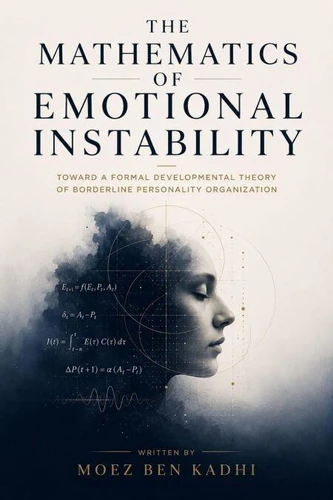
The Mathematics of Emotional Instability
Par :Formats :
Disponible dans votre compte client Decitre ou Furet du Nord dès validation de votre commande. Le format ePub est :
- Compatible avec une lecture sur My Vivlio (smartphone, tablette, ordinateur)
- Compatible avec une lecture sur liseuses Vivlio
- Pour les liseuses autres que Vivlio, vous devez utiliser le logiciel Adobe Digital Edition. Non compatible avec la lecture sur les liseuses Kindle, Remarkable et Sony
 , qui est-ce ?
Notre partenaire de plateforme de lecture numérique où vous retrouverez l'ensemble de vos ebooks gratuitement
Pour en savoir plus sur nos ebooks, consultez notre aide en ligne ici
C'est si simple ! Lisez votre ebook avec l'app Vivlio sur votre tablette, mobile ou ordinateur :

- FormatePub
- ISBN8235603622
- EAN9798235603622
- Date de parution24/05/2026
- Protection num.pas de protection
- Infos supplémentairesepub
- ÉditeurIoakim Ioakim
Résumé
No child is born afraid of being abandoned. Fear arrives later. It enters quietly through inconsistent touch, through voices that alternate between tenderness and emotional disappearance, through the unpredictable physics of love inside unstable environments. The nervous system learns before language does. Long before a child can explain pain, the body begins constructing internal predictions about safety, intimacy, rejection, and survival.
This book begins from a dangerous premise:What if borderline personality disorder is not a broken personality, but an adaptive emotional system developed under impossible relational conditions?For decades, Borderline Personality Disorder has been described through symptoms: impulsivity, self-harm, emotional instability, rage, emptiness, fear of abandonment, identity disturbance. Yet symptoms are not explanations.
A scream is not the same thing as the architecture that produced it. Psychiatry has often approached borderline pathology descriptively rather than structurally. Behaviors are categorized, emotional reactions are measured, crises are managed, but the deeper developmental mechanics of instability remain partially obscured beneath diagnostic language. This work proposes another possibility. That emotional instability follows patterns.
That attachment trauma leaves measurable psychological geometry. That dissociation, splitting, idealization, emotional collapse, and identity fragmentation are not random emotional failures, but recursive adaptations emerging from chronic relational unpredictability. In mathematics, unstable systems are not irrational systems. They are systems operating under conditions of nonlinear stress amplification.
Small disturbances produce disproportionately large reactions because the structural equilibrium of the system has already been compromised.
This book begins from a dangerous premise:What if borderline personality disorder is not a broken personality, but an adaptive emotional system developed under impossible relational conditions?For decades, Borderline Personality Disorder has been described through symptoms: impulsivity, self-harm, emotional instability, rage, emptiness, fear of abandonment, identity disturbance. Yet symptoms are not explanations.
A scream is not the same thing as the architecture that produced it. Psychiatry has often approached borderline pathology descriptively rather than structurally. Behaviors are categorized, emotional reactions are measured, crises are managed, but the deeper developmental mechanics of instability remain partially obscured beneath diagnostic language. This work proposes another possibility. That emotional instability follows patterns.
That attachment trauma leaves measurable psychological geometry. That dissociation, splitting, idealization, emotional collapse, and identity fragmentation are not random emotional failures, but recursive adaptations emerging from chronic relational unpredictability. In mathematics, unstable systems are not irrational systems. They are systems operating under conditions of nonlinear stress amplification.
Small disturbances produce disproportionately large reactions because the structural equilibrium of the system has already been compromised.