James R. Hartwell writes practical nonfiction on business, strategy, and personal growth. His work turns complex ideas into clear, useful insights for modern readers.
Nouveauté
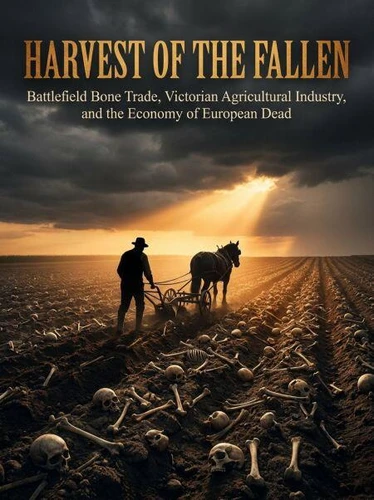
Harvest of the Fallen. Battlefield Bone Trade, Victorian Agricultural Industry, and the Economy of European Dead
Par :Formats :
Disponible dans votre compte client Decitre ou Furet du Nord dès validation de votre commande. Le format ePub est :
- Compatible avec une lecture sur My Vivlio (smartphone, tablette, ordinateur)
- Compatible avec une lecture sur liseuses Vivlio
- Pour les liseuses autres que Vivlio, vous devez utiliser le logiciel Adobe Digital Edition. Non compatible avec la lecture sur les liseuses Kindle, Remarkable et Sony
 , qui est-ce ?
Notre partenaire de plateforme de lecture numérique où vous retrouverez l'ensemble de vos ebooks gratuitement
Pour en savoir plus sur nos ebooks, consultez notre aide en ligne ici
C'est si simple ! Lisez votre ebook avec l'app Vivlio sur votre tablette, mobile ou ordinateur :

- Nombre de pages159
- FormatePub
- ISBN978-3-565-63088-2
- EAN9783565630882
- Date de parution10/08/2026
- Protection num.pas de protection
- Taille973 Ko
- Infos supplémentairesepub
- ÉditeurEmphaloz Publishing House
Résumé
When British merchants crossed the fields of Waterloo to collect the dead, they were not mourning - they were calculating. By the 1820s, the bones of soldiers, prisoners, and the long-buried poor had become one of England's most sought-after agricultural imports, ground into phosphate meal and scattered across fields feeding an industrial nation. The dead, it turned out, were worth more dissolved in acid than commemorated in stone.
The 19th-century bone trade exposed a raw logic at the heart of Victorian capitalism: that the body, once separated from its social identity, was raw material.
Britain imported hundreds of thousands of tons of human and animal bone from the Baltic, the Rhine, and the old Napoleonic battlefields of Central Europe. Farmers' journals celebrated the yields. Parliamentary committees debated the supply chain. No legislation governed what could be exhumed. The market did not ask for names. This history traces the bone trade as a window into the political economy of Victorian Britain - the relationship between industrial agriculture, imperial resource extraction, and the erasure of the European poor from the moral ledger of progress.
It asks what it meant for a civilization to build its food supply on the unacknowledged labor of the dead, and what that silence still costs.
Britain imported hundreds of thousands of tons of human and animal bone from the Baltic, the Rhine, and the old Napoleonic battlefields of Central Europe. Farmers' journals celebrated the yields. Parliamentary committees debated the supply chain. No legislation governed what could be exhumed. The market did not ask for names. This history traces the bone trade as a window into the political economy of Victorian Britain - the relationship between industrial agriculture, imperial resource extraction, and the erasure of the European poor from the moral ledger of progress.
It asks what it meant for a civilization to build its food supply on the unacknowledged labor of the dead, and what that silence still costs.